
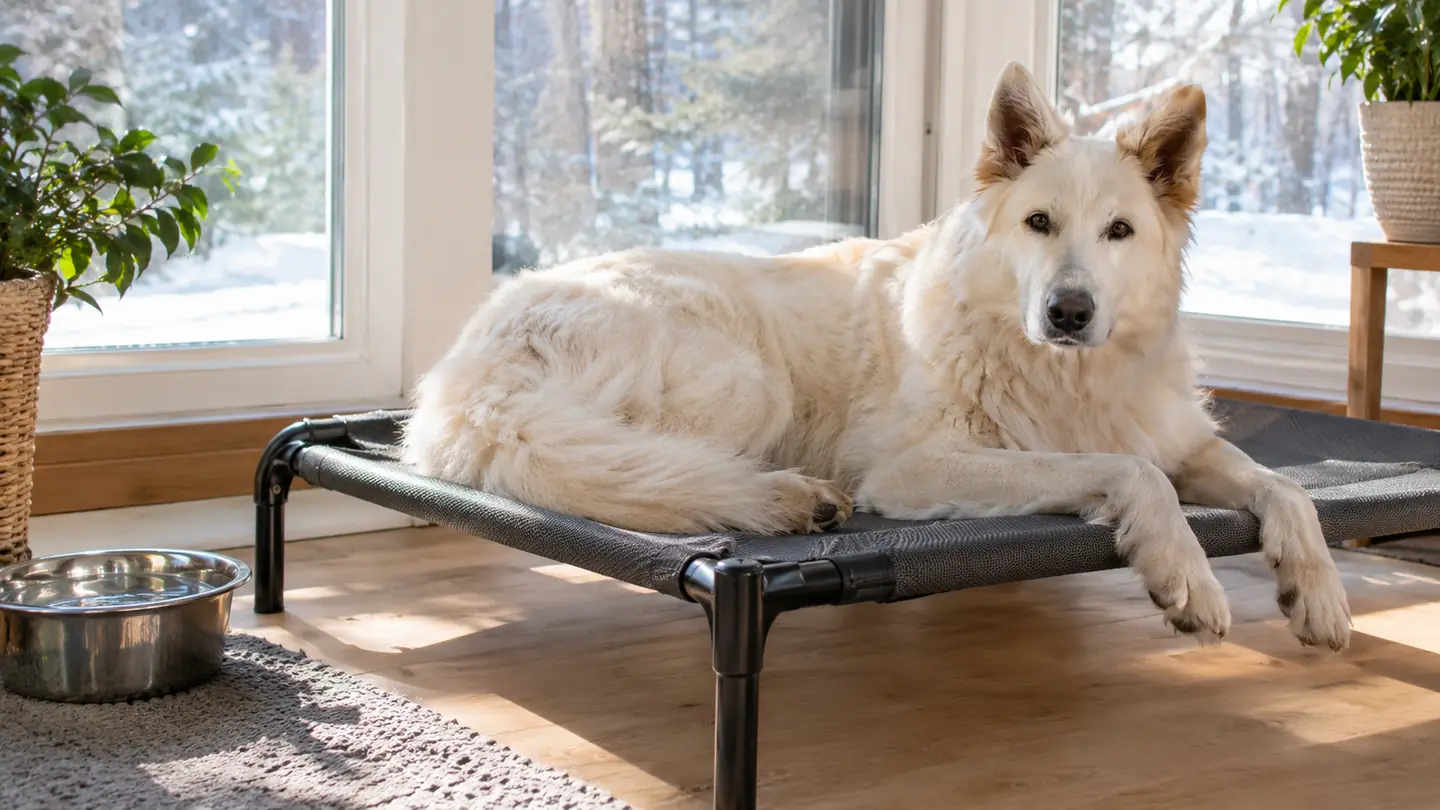
If you have ever stood in the dog bed aisle wondering whether to buy the raised cot or the thick foam slab, I have been exactly where you are. For eleven years I ran a small licensed in-home boarding business out of my converted mudroom outside Loveland, Colorado, with four to six guest dogs at a time. I have cleaned every kind of bed, hosed down every kind of cover, and watched hundreds of dogs pick their favorite spot. The two beds people ask me about most are the Bedsure Elevated Dog Bed and the classic orthopedic foam bed. They solve different problems, and the right choice depends entirely on your dog and your floors. I learned that lesson the hard way in my second year of boarding, when a Great Dane mix who had just arrived from a shelter refused to sleep on the expensive foam bed I had bought the week before. He kept flopping onto the cool tile floor of the boarding room, and no amount of coaxing would change his mind. I tried a thicker pad, a fleece cover, even a heated bed. Nothing worked until a friend suggested a raised cot. The moment I set up the Bedsure, he climbed on, turned a circle, and stayed there all night. That was the day I understood that some dogs simply want air moving under them.
Here is the short answer: the Bedsure elevated cot wins for durability, airflow, and cleanup, while the orthopedic foam bed wins for joint support on hard floors and for dogs who need to feel nestled. I kept both in my boarding room because each one earned its place. But if I could only keep one for a houseful of active dogs, it would be the Bedsure elevated bed. The foam bed is the one I would choose for a single senior dog with arthritis, but for a rotating cast of guest dogs who come in muddy, wet, and occasionally nervous, the Bedsure is simply the more practical tool. It is also the bed that survived my eleven years of boarding with the least amount of fuss. I replaced the foam bed three times in that period, but the original Bedsure frame is still in my garage today, ready for the next foster dog. When I finally closed the boarding business last spring, I gave away most of the gear, but I kept that Bedsure. It has a small scuff on one corner where a particularly enthusiastic guest dog dragged it across the concrete floor, but the mesh is intact and the frame is as solid as the day it arrived. And if you are wondering about the price difference, the Bedsure is usually the more affordable option, and you will not have to buy replacement inserts every couple of years. Over the long run, that makes the Bedsure the better value for most households.
| Bedsure Elevated Dog Bed | Orthopedic Foam Bed | |
|---|---|---|
| Price | Usually the more affordable option, and it does not need a replacement insert | Often costs more for comparable quality, and the foam core degrades over time |
| Durability | Powder-coated steel frame and mesh that survive chewing, scratching, and repeated washing | Foam holds up fine for calm dogs, but edges get chewed and the core loses shape |
| Cleanup | Waterproof mesh means accidents, mud, and fur rinse off in minutes | Covers zip off for washing, but urine can soak into the foam and leave a smell |
| Joint Support | Firm, supportive surface, but not the best choice for a dog with serious arthritis | Thick memory foam cradles hips and elbows, the better choice for stiff joints |
| Airflow | Open mesh lets air move underneath, keeps dogs cool in summer and dry in humidity | Dense foam traps heat, which can make a dog hot in warm weather |
| Best For | Active dogs, boarding situations, outdoors, and dogs that overheat | Senior dogs, dogs with arthritis, and dogs who like to burrow |
Where Bedsure Wins
The Bedsure elevated dog bed is the bed I reached for again and again during my boarding years. The frame is a powder-coated steel tube that does not bend under a heavy dog, and the mesh surface is taut enough that even a 90-pound guest dog did not sag to the floor. I had one enthusiastic chewer in residence one summer, and while he managed to pull at the edge of the mesh, the damage stayed small and the bed kept working. A foam bed would have been destroyed in a single afternoon. That chewer was a young border collie mix who had been surrendered because he chewed through three beds in his previous home. I put him in the boarding room with the Bedsure and watched him try to get his teeth into the mesh. He managed to fray a small section along the edge, but the frame never bent and the bed stayed usable. I patched the fray with a piece of duct tape and it held for the rest of his stay. A foam bed would have been a pile of stuffing within an hour. That border collie mix went on to be adopted by a family who still writes to me, and they bought a Bedsure of their own.
Cleanup is where the Bedsure really separates itself. When a nervous puppy had an accident or a dog came in from the muddy side yard, I did not have to strip a cover and wrestle with a foam insert. I carried the whole bed outside, hosed it down, and let it dry in the sun. It was dry and back in the boarding room within the hour. With a foam bed, a single accident can soak through the cover and into the core, and the smell lingers no matter how many times you wash it. In a home where multiple dogs rotate through, that difference alone is worth the switch. I remember one August afternoon when a thunderstorm rolled through and three guest dogs came in soaked and covered in mud. The foam bed in the corner took the brunt of it and smelled like wet dog for a week. The Bedsure, on the other hand, was clean and dry in time for the evening feeding. I also liked that I could stand the Bedsure against the wall when I swept the floor, which I could never do with a bulky foam bed. I also learned to keep a spare cover on hand for the foam bed, because the zippers on the covers were the first thing to break. The Bedsure has no zippers to fail, which is one less thing to worry about. I also found that the Bedsure was easier on my back. I did not have to bend down and lift a heavy foam slab every time I cleaned the room. I could just pick up the frame with one hand and carry it outside.
Hose It Down and It Is Clean
The Bedsure elevated dog bed handles mud, accidents, and fur better than any foam bed I have used. If you are tired of wrestling with soggy foam inserts, this is the bed that makes cleanup take minutes.
Amazon Check Today's Price on Amazon →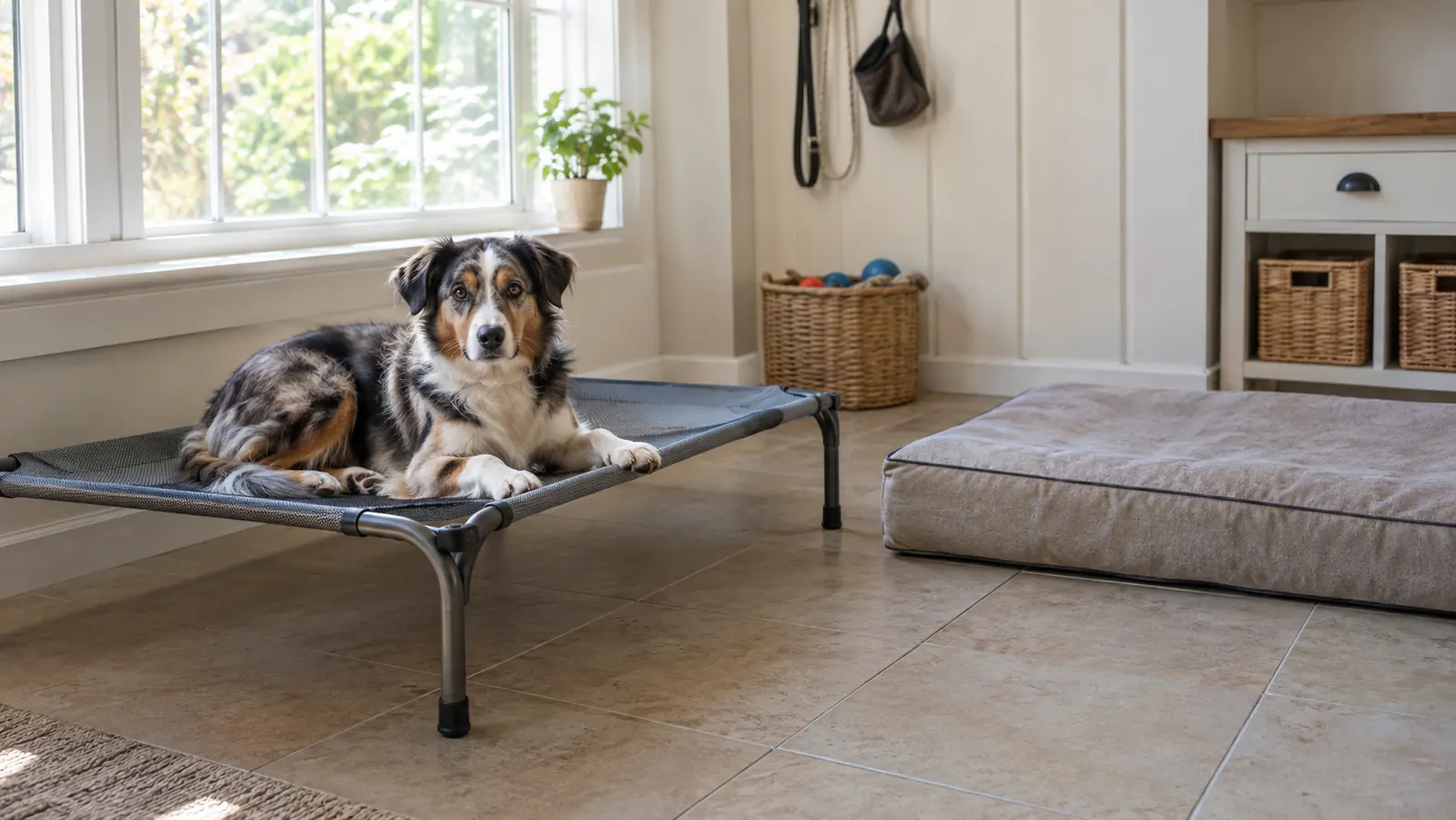
Where Orthopedic Foam Wins
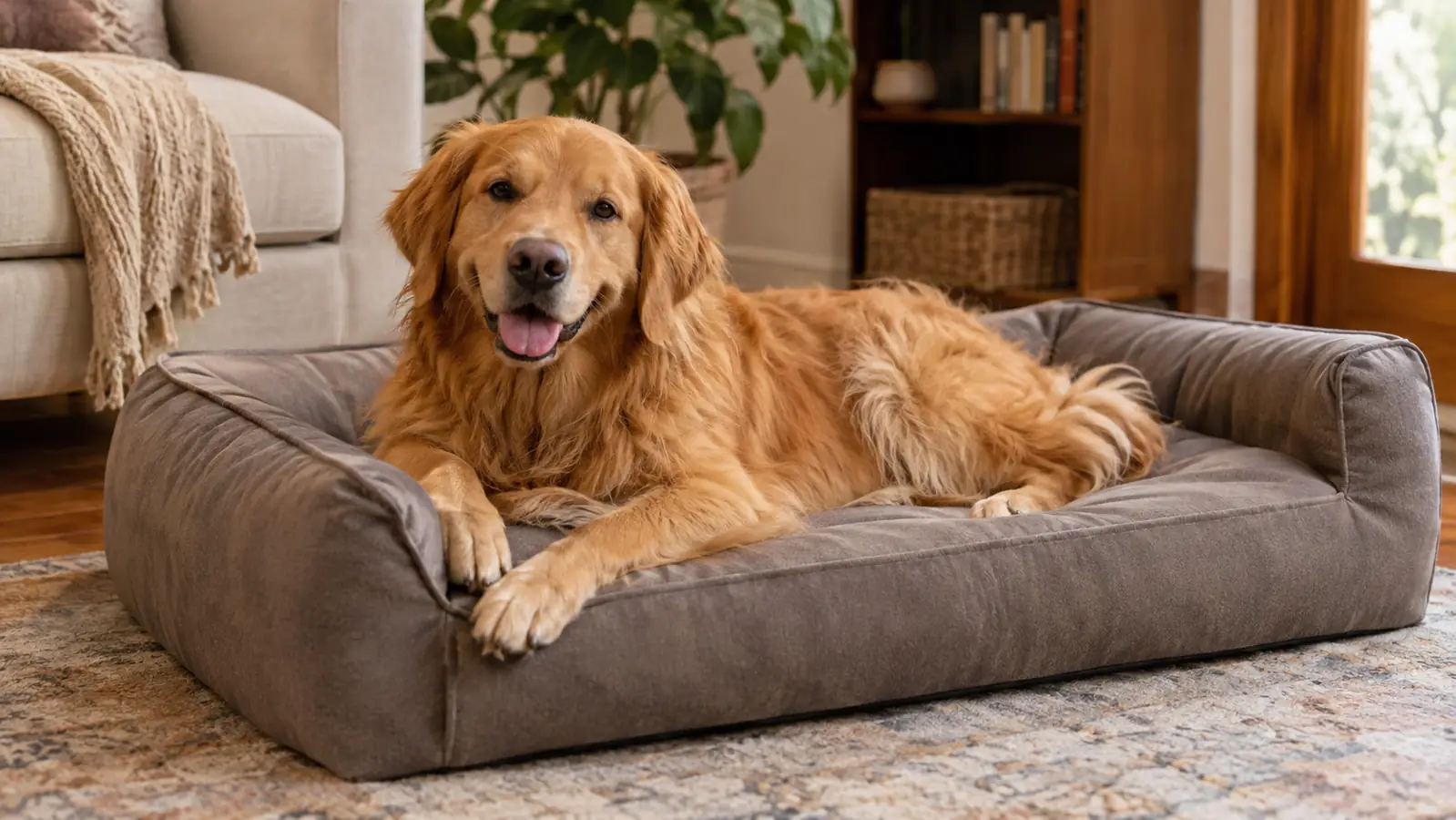
I am not going to pretend the foam bed does not have its place, because it absolutely does. My own dog Juniper, a 7-year-old Australian Shepherd mix, prefers the foam bed on cold winter nights. She curls into it the way a person curls into a good armchair, and the thick memory foam cradles her hips in a way the taut mesh of the elevated bed simply cannot. For a dog with arthritis, hip dysplasia, or any kind of joint pain, the orthopedic foam bed is the kinder surface, especially on hard floors. I saw this firsthand with a 12-year-old lab mix we boarded one February. She had been diagnosed with arthritis in both hips, and she would not go near the elevated bed. She spent her first night lying on the cold linoleum. The next day I brought out a foam bed with a raised rim, and she climbed in and slept for six hours straight. Her owner told me later that she had been sleeping on the floor at home too, because her old bed had lost its shape. That is the real argument for foam: it offers pressure relief that a taut mesh surface simply cannot match. The lab mix stayed with us for two weeks, and by the end of her stay she was climbing onto the foam bed on her own. Her owner came to pick her up and was amazed at how easily she moved. That is the kind of result that makes me recommend foam for the right dog. The lab mix's owner was so impressed that she asked me where to buy a similar bed, and I pointed her to the same foam model I was using.
The foam bed also wins on the psychological comfort of feeling enclosed. Many dogs, especially seniors and anxious rescue dogs, want a soft boundary around them when they sleep. The elevated cot is open on all sides, which some dogs love for the airflow and some dogs find exposed. I boarded a nervous beagle one Christmas who would not set foot on the elevated bed for three days. The moment I put down a foam bed with a raised rim, she climbed in, turned around twice, and was asleep. If your dog likes to burrow or lean against something, the foam bed is the one they will actually use. I have also seen dogs who were perfectly healthy choose the foam bed over the elevated cot on cold nights, simply because they wanted to be nestled. Juniper does this every winter. She has a perfectly good Bedsure in the sunroom, but on nights when the temperature drops below freezing, she walks past it and curls up on the foam bed in the mudroom. I think part of it is the warmth. Memory foam holds body heat in a way that open mesh never will. In the summer, though, that same warmth works against it, which is why I always kept the Bedsure in the sunroom for the hot months.
Who Should Buy Which
Buy the Bedsure elevated dog bed if you have an active dog, a dog who spends time outdoors, a dog who runs hot, or a household where accidents and muddy paws are a regular fact of life. It is also the better choice for a second bed on the porch or in the garage, because it shrugs off weather and cleans up with a hose. If you board dogs, foster, or simply have a high-traffic home, the Bedsure is the bed that will still look and work like new after a year of hard use. I put mine through eleven years of boarding, which means thousands of dog-nights, and the frame is still straight and the mesh is still intact. I have seen the same bed go through a household with three large dogs and come out the other side with nothing worse than a few scuffs. It is not indestructible, but it is close enough that I would trust it in any busy home. I have also used it outdoors on the patio in the summer, and it held up to sun and rain without rusting or fading. The powder-coated frame does not peel, and the mesh does not sag even after a full season outside. That is more than I can say for the foam bed, which I would never leave outside because it would soak up moisture and grow mold. If you are still torn, think about where the bed will live. The Bedsure is the bed for the living room, the porch, and the boarding room. The foam bed is the bed for the bedroom and the crate. That simple split has worked for me for years.
Buy the orthopedic foam bed if your dog is a senior, has diagnosed joint issues, or clearly prefers a soft, enclosed sleeping spot. It is the better surface for a dog who needs pressure relief on hard floors, and it is the bed your arthritic dog will choose nine times out of ten. The tradeoff is that you will need to protect it carefully, wash covers often, and accept that the foam core will eventually lose its shape and need replacing. I replaced the foam bed in my boarding room three times in eleven years, which adds up. If you are willing to do that maintenance, the foam bed is a wonderful thing for the right dog. But if you are looking for a set-and-forget bed that will survive a houseful of dogs, the Bedsure is the one. I would also add that you can use both: put the Bedsure in the main living area and keep a foam bed in the bedroom for your senior dog. That is exactly what I do with Juniper, and it gives her the best of both worlds. I also want to note that the Bedsure is not a great fit for a dog who likes to dig. If your dog scratches and digs at their bed before lying down, the mesh can get frayed over time. I had one guest dog who did that, and I had to patch a small hole. It was still usable, but it was a reminder that no bed is completely indestructible. And if you have a puppy, the Bedsure is the safer choice because it is harder for them to chew through the frame, though the mesh is not completely chew-proof.
The Bed That Survives Real Life
After eleven years of boarding dogs, the Bedsure elevated bed is the one I still recommend for busy households. It is durable, easy to clean, and comfortable enough that most dogs choose it on their own.
Amazon Check Today's Price on Amazon →