
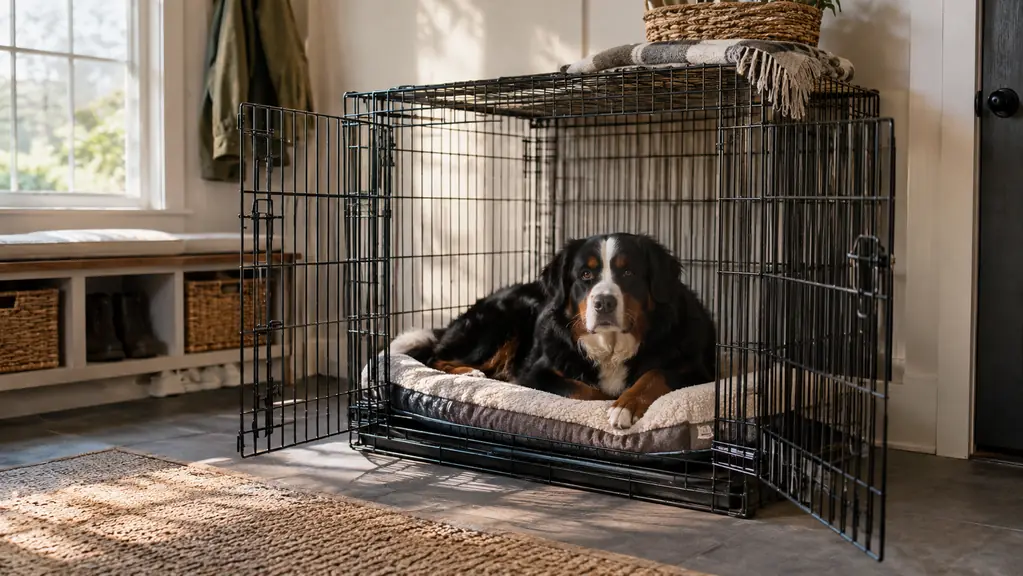
The first wire crate I bought for my boarding room lasted exactly one guest dog. A determined chewer worked the door seam open in about three hours, and I learned the lesson every boarder learns sooner or later: the cheap crate is the expensive crate. The MidWest Homes for Pets iCrate 42-Inch has been with me for eight years now, six of them in my converted mudroom while I was still boarding, and two more since I closed the business. Juniper, my own dog, has decided it is her favorite place to nap.
I am not a veterinarian and I do not pretend to be one in this review. I am a 54-year-old former boarder who cleaned a lot of kennels, watched a lot of guest dogs test my gear, and formed strong opinions about which equipment survives. If you are reading this because you are thinking about starting a boarding business, or because you just brought home a large puppy, here is my advice in one line: buy the crate you will still be using in five years. That is the crate this review is about.
The Quick Verdict
The MidWest iCrate 42-Inch is the crate I bought after the cheap one failed, and it is the one still standing eight years later. It is not fancy, but it has survived a houseful of boarding dogs, and I would buy it again tomorrow.
Amazon Check Today's Price →The crate that survived eight years of guest dogs
If you want the same double-door crate that held up in my boarding room for the better part of a decade, check today's price on Amazon.
Amazon Check Today's Price on Amazon →How I've Used It
My setup is ordinary. I live on a few acres outside Loveland, Colorado, in a single-story ranch house with a mudroom I converted into the boarding room and a detached garage out back. At my busiest, I had four to six guest dogs at a time, most of them large breeds, some anxious, a few determined to find a way home. The room itself is about 12 by 14 feet, with crates along the west wall and the washer and dryer tucked into the corner, so every inch of floor plan mattered. When I set up the first iCrate, I measured to make sure the side door had a good six inches of clearance from the wall. That gap let me reach in to clip a leash without waking a sleeping dog, and it saved my back more times than I can count.
The 42-Inch iCrate lived in that room for six years, and it has spent two more in the garage and the side yard since I closed the business. Juniper is only 48 pounds, well under the 71 to 90 pound range this crate is built for, and she still picks it over her smaller crate most nights. That is the highest praise a crate can get.
Over the years it has held a nervous beagle we boarded one Christmas, a young lab who hated the ride over, and a senior shepherd who needed a quiet corner away from the pack. It has been hosed down, scrubbed with soap, and disinfected between guests more times than I can count. It still opens and closes the way it did the day it arrived.
What the Double-Door Design Actually Buys You
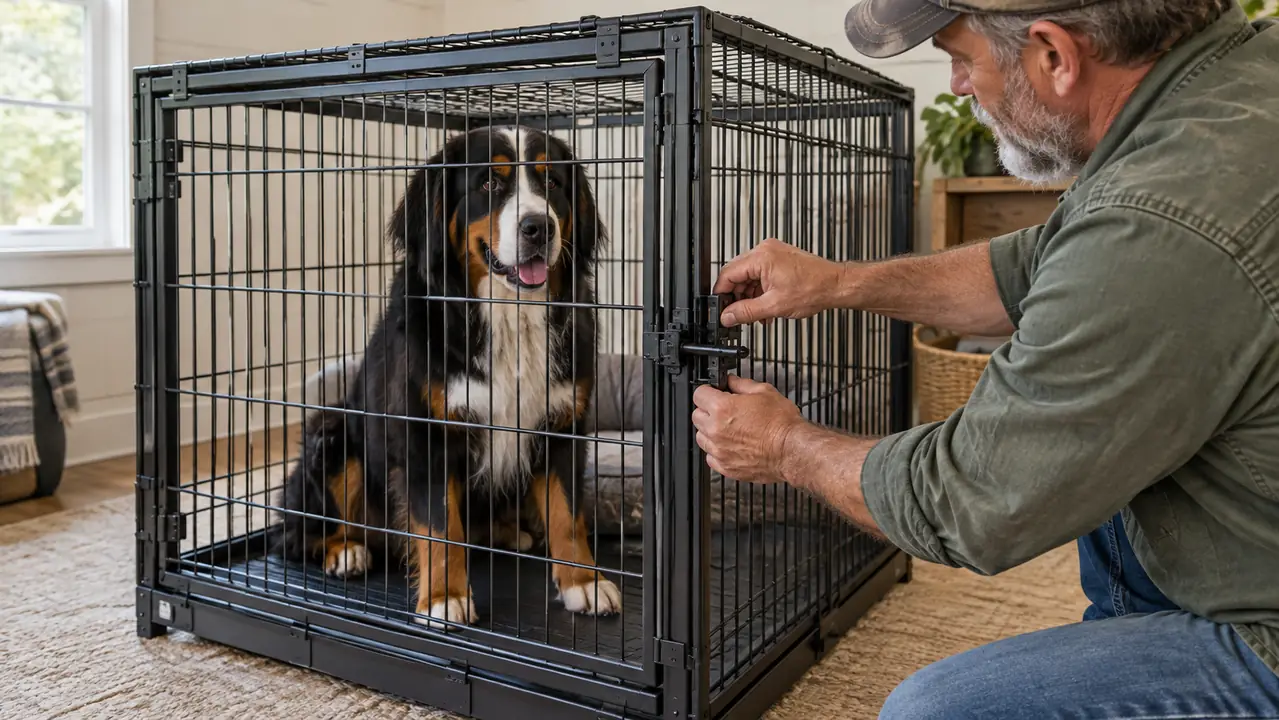
The 42-Inch iCrate is a collapsible wire crate sized for large breeds in the 71 to 90 pound range. The feature that matters most to me is the two doors. The end door opens on the end, the side door opens on the side, and in a boarding room with crates along two walls that meant I could always reach a dog without climbing over another crate or asking a guest to move. One summer evening, a guest dog got his collar hung on the top of the end door while I was closing it. The side door let me open the panel right beside his head and free him without a struggle. From that night on, I counted the second door as a safety feature, not a convenience.
The doors slide up and latch with a simple hook on each side. There is nothing clever about the mechanism, and that is exactly why it has held up. MidWest Homes for Pets has been building crates for a long time, and this one shows it. In eight years I have replaced the plastic floor pan three times, because toenails and the occasional determined chewer wear on it. The frame, the welds, and the latches have never needed a repair.
It folds flat when I need it to. I have loaded it into my older Subaru Outback more times than I can count, set it up at a friend's house for a guest dog, and folded it away between boardings. The fold takes about a minute once you know the trick: squeeze the sides together, push the top down, and it collapses into a flat panel I can lean against a wall.
What Eight Years of Boarding Dogs Did to It
The honest part of any long-term review is the wear. After eight years, the frame, the welds, and the latches all still look almost new. The powder coating has worn thin in two spots where the crate rubs against the wall, but there is no rust and no sharp edge. For a crate that has been hosed down weekly and lived in a room with four to six dogs, that is better than I expected. The worst single day was a June afternoon in 2021, when a guest dog with separation anxiety pawed at the door seam for a solid hour while I was in the other room. I came back expecting damage. The pan was scratched, but the door seam had not budged, and that was the moment I stopped second-guessing the purchase.
The plastic pan is the part that wears first. Toenails scratch it, and a guest who digs at the door will chew the edge. I have bought three replacement pans over the years, and each swap took about five minutes. I count that as normal maintenance, not a failure.
One thing I learned the hard way: the little rubber feet on the bottom of the pan keep the crate from sliding on a hard floor, but they will not stop a determined 80-pound dog from scooting the whole crate across the room. I anchor my crates against a wall. That is true of any wire crate, so I do not hold it against this one.
The crate spends most of its life with the door open now. Juniper goes in and out all day, and when a guest dog is here, the guest gets the crate and Juniper supervises from her bed by the door. That has been the arrangement for two years, and it has not needed to change.
Eight years of boarding dogs, and the only part I ever replaced was the plastic pan. That is the whole review in one sentence.
The Tradeoffs Nobody Mentions in the Product Listing
No crate is perfect, and the iCrate has three tradeoffs worth knowing before you buy. First, the floor pan is plastic, so a guest who is determined to dig can chew the edge. It happened to me exactly once, and I replaced the pan instead of fighting the dog. Second, the 42-Inch size is right for dogs in the 71 to 90 pound range, but it is not a giant crate. If you board a mastiff or a Great Dane, go up a size.
Third, the latches are simple hooks. That is a good thing for a human with cold hands at 6 a.m., and it is a useless thing against the rare dog that has learned to work a latch. In eleven years of boarding, I had one guest who figured it out. I used a small carabiner through the door hook for the rest of his stay, and the problem was solved. It was a plain aluminum one from the hardware store, the kind you use for keys. It clipped through the door hook in seconds, and the guest dog never once tried the door again for the rest of his stay. Cheap insurance, and it did not change the crate at all.
None of these tradeoffs stopped me from using the crate for eight years. They are the difference between knowing what you are buying and finding out six months later, and I would rather you know now.
And one more thing that is not really a tradeoff but a reminder: a crate is a management tool, not a babysitter. I never left a guest dog in a crate for more than a few hours at a stretch, and I always made sure the crate was the right size, the pan was clean, and the room was cool. No crate fixes a bad routine.
Alternatives I Tried Before I Landed on This One
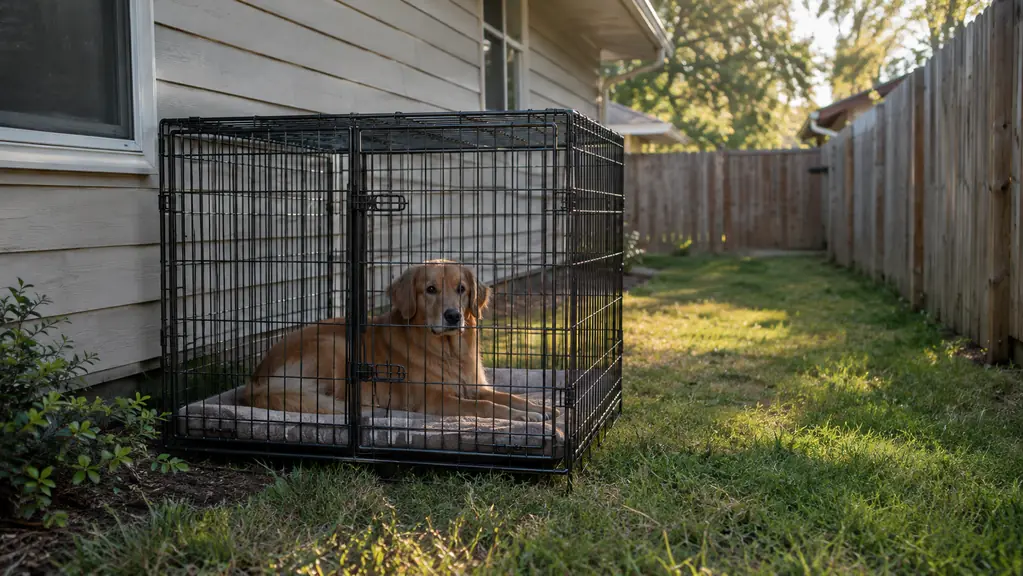
Before the iCrate, I used two other kinds of crates in my boarding room. The first was a cheaper wire crate from a big-box store. It lasted one guest dog, and the door seam is exactly where it failed. I do not remember the brand and I do not want to; the lesson stuck either way.
The second was a plastic airline-style crate, the kind that bolts together in two halves. It is sturdy and about as escape-proof as a crate gets, but it is heavy, hard to hose out, and miserable to fold away. It still lives in my garage for the rare guest who absolutely cannot be trusted in wire, but it is not the crate I reach for first.
The iCrate splits the difference. It is light enough to move, open enough for air and visibility, and sturdy enough to survive a houseful of dogs. That combination is why it earned the permanent spot in my boarding room, and why I have recommended it to every new boarder who asked.
The Size Question: 42-Inch vs Everything Else
The 42-Inch is the size I recommend to most people who board large dogs, but sizing a crate is about more than the dog's weight. You want the dog to stand up without crouching, turn around without squeezing, and lie down flat. An 80-pound lab fits the 42-Inch comfortably. A long-backed dog of the same weight might want the next size up.
When I am not sure, I measure the dog from nose to base of the tail and add a few inches. The 42-Inch crate is roughly 42 inches long, which suits most large breeds. A crate that is too big is less of a problem than a crate that is too small, but a crate that is too big also takes up more floor space than a boarding room can spare.
For a boarding setup, I would rather have one crate that fits every guest than a wall of different sizes. The 42-Inch is my default, and I keep one smaller crate in the garage for the occasional small guest. That covers almost everything that walks through my door.
What I Liked
- Double doors mean I can reach any dog without reaching over another crate
- Folds flat in about a minute and fits in my Subaru Outback
- Frame, welds, and latches have held up through eight years of boarding dogs
- Easy to hose down and disinfect between guests
- Replacement pans are cheap and take five minutes to swap
Where It Falls Short
- Plastic floor pan can be chewed by a determined digger
- Simple hook latches are not truly escape-proof
- 42-Inch size is for 71 to 90 pound dogs, not giant breeds
- Powder coating wears thin where the crate rubs a wall
Who This Is For
This crate is for you if you board dogs, foster, or just want a sturdy wire crate that will outlast the dog. It is for the person who wants two doors, an easy fold, and a brand that has been building crates for a long time. MidWest Homes for Pets does not make the cheapest crate on the shelf, and it does not need to.
For a large breed in the 71 to 90 pound range, the 42-Inch is the size to buy. It gives a big dog room to stand up, turn around, and lie down flat, which is the minimum any crate should offer. Juniper is well under that size and still chooses it, so do not worry about a smaller dog being uncomfortable in it.
If you are a foster volunteer, a breeder, or a hunter who needs a reliable crate for the truck, the same reasons apply. The iCrate is not a specialty tool. It is the everyday crate that does not get in your way, and that is a higher compliment than it sounds like.
Who Should Skip It
Skip this crate if you have a true escape artist. A dog that has learned to work simple latches will get out, and you will need a carabiner, a different latch, or a plastic airline-style crate instead. Skip it if you have a giant breed. The 42-Inch is generous for a lab or a shepherd, but a mastiff needs the next size up.
And skip it if what you really want is a piece of furniture. There are beautiful wooden and furniture-style crates that belong in a living room, and this is not one of them. The iCrate is a working crate. It looks like a working crate, it cleans like a working crate, and it earns its keep in a mudroom, a garage, or a boarding room.
One last group to be honest about: if you want a crate you will never have to think about again, this is close, but the plastic pan will eventually need replacing. That is an inexpensive part and a five-minute job. If the idea of replacing a pan bothers you, no crate on the market will make you happy.
Still the first crate I recommend to new boarders
After eight years and dozens of guest dogs, the MidWest Homes for Pets iCrate 42-Inch is the first thing I tell new boarders to buy. Check today's price on Amazon.
Amazon Check Today's Price on Amazon →