
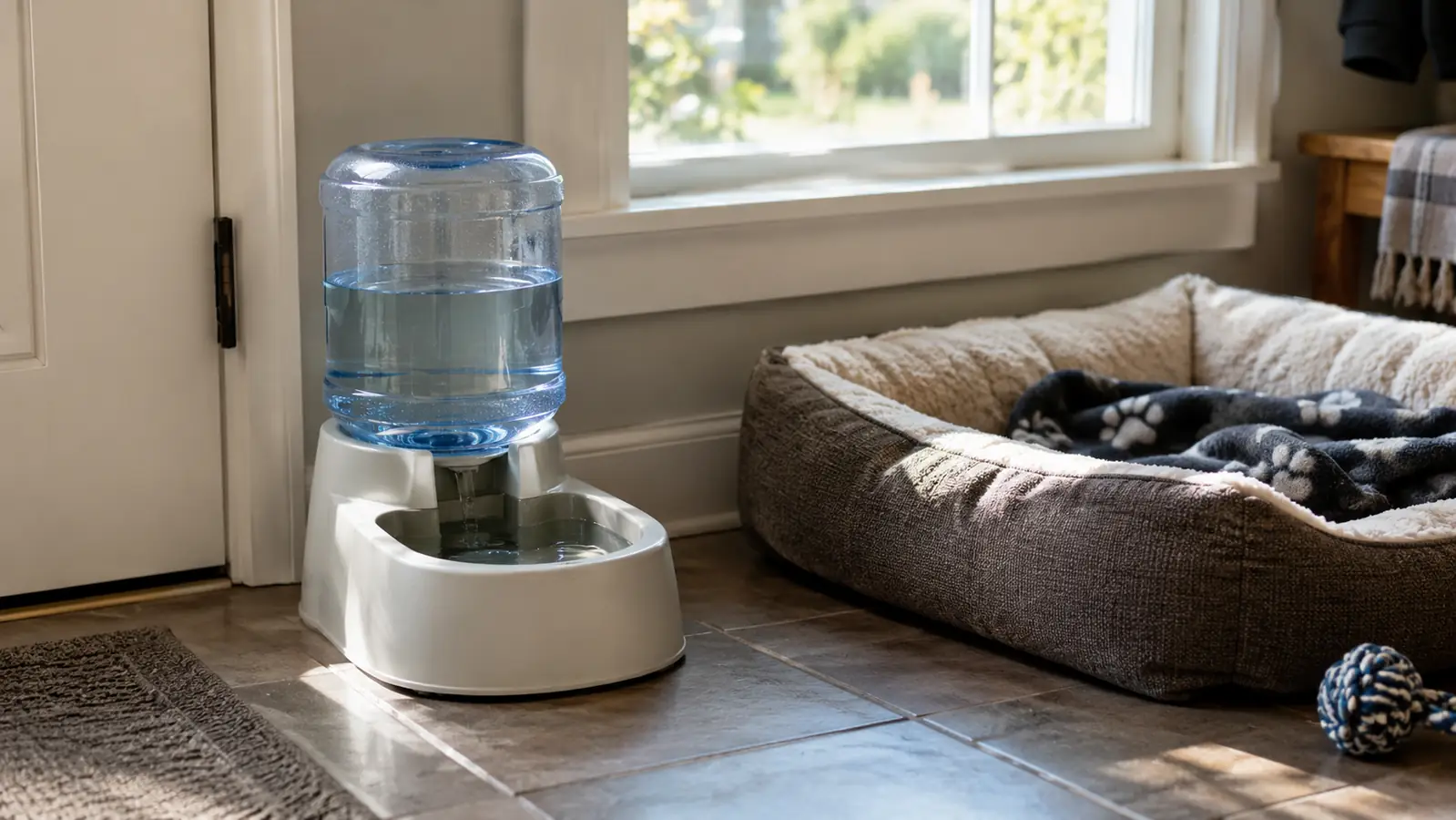
When I ran a licensed in-home dog boarding business out of my acreage outside Loveland, Colorado, the question I heard most from new clients was not about walks or meals. It was about water. They would drop off a nervous dog and ask, 'Will she have fresh water all day?' I understood why. A bowl left out for eight hours collects dust, fur, and a film of saliva, and a busy household forgets to refill it. The answer I landed on after eleven years of boarding four to six guest dogs at a time was a gravity waterer, specifically the Petmate Pet Cafe. It is not fancy. It is a reservoir that refills the bowl as your dog drinks, and it does that one job without fail. This guide walks through how I set one up and kept it working, so your guest dogs always have clean water, even when you are running errands or working in the yard.
Before I switched to gravity waterers, I used a heavy ceramic bowl and refilled it three times a day. That worked when I was home, but boarding dogs means leaving the house for school pickup, vet runs, and supply trips. A guest dog that empties a bowl in an hour and then waits six hours for a refill is a guest dog that is not drinking enough. Dehydration in a stressed dog is a real concern. I am not a vet, and I called ours more than once, but the simplest fix was to make the water supply last. A gravity waterer does that by holding a larger volume above the drinking bowl and letting gravity do the refilling.
The Petmate Pet Cafe keeps a full bowl in front of every guest dog.
It holds 0.75 gallons, which is enough for a small group of dogs, and the whole unit comes apart for cleaning. If you are tired of refilling bowls all day, this is the tool I used for years.
Amazon Check Today's Price on Amazon →How I Set It Up for Guest Dogs
The setup takes about ten minutes the first time and two minutes every morning after that. I kept the Petmate in the mudroom I converted into the boarding room, on the tile floor near the door to the fenced side yard. That location mattered because the dogs drank most after coming inside, and it was easy to mop if somebody splashed. Here are the five steps I followed.
Step 1: Pick the Right Size and Location
The Petmate Pet Cafe holds 0.75 gallons, which sounds small until you realize the bowl itself holds a good amount and the reservoir feeds it slowly. For my typical group of four to six guest dogs, one unit was enough for a full day, and I kept a second one in the garage for overflow. If you board one or two dogs at a time, a single Petmate will likely cover you from breakfast to bedtime.
Location matters more than you might think. I placed mine on a non-slip mat in a corner of the mudroom, away from the food bowls and the dog beds. That kept the water from getting contaminated with kibble crumbs and kept the floor from turning into a muddy puddle. The tile floor also made cleanups easy. If you have a dog that likes to tip bowls, the low, wide base of the Petmate makes that much harder to do.
One thing I tell new boarders is to buy two if you regularly take in more than three dogs. The Petmate is affordable enough that keeping a backup in the garage saved me more than once when a guest dog knocked the whole unit over during a bout of zoomies. It does not happen often, but when it does, you want a clean backup ready.
Step 2: Clean the Whole Unit Before the First Fill
New plastic can carry a factory smell, and some dogs are sensitive to it. I washed the entire Petmate in warm, soapy water before the first fill, including the reservoir, the bowl, and the little valve piece. I rinsed everything twice to make sure no soap residue remained. Then I filled it and let it sit for an hour before offering it to the dogs.
That first hour also let me check for leaks. I set the Petmate on a paper towel and watched to see if any water crept out around the seal. A small amount of dripping is normal right after you fill it, because the water settles, but a steady leak means the valve is not seated. I only had to reseat the valve once in eleven years, and it took ten seconds.
I also learned to dry the outside of the reservoir before setting it down. A wet base on a tile floor is a slipping hazard, and I had a senior dog who moved carefully. A quick wipe with a towel took two seconds and kept the mudroom safe.
Step 3: Place It Low Enough for the Smallest Guest
The drinking bowl on the Petmate sits low to the ground, which is exactly what you want for a houseful of dogs of different sizes. I boarded everything from a six-pound Chihuahua to a ninety-pound Lab mix, and both could reach the water without straining. If the bowl is too high, small dogs will not drink as much, and that is a problem you will not notice until the end of the day.
I also made sure the waterer was not tucked into a corner where a shy dog could be trapped. Guest dogs often arrive nervous, and a dominant dog can guard a water source. By placing the Petmate in an open area with two ways to approach it, I gave every dog a chance to drink without confrontation. That simple change cut down on the number of water-related squabbles I saw.
If you have a puppy, expect some splashing. Puppies do not have great depth perception, and they will stick their whole face in the bowl. The boot tray I mentioned earlier caught most of it. I also checked the floor around the Petmate every evening and wiped up any puddles so nobody tracked water through the house.
Step 4: Fill It With Fresh Water Every Morning
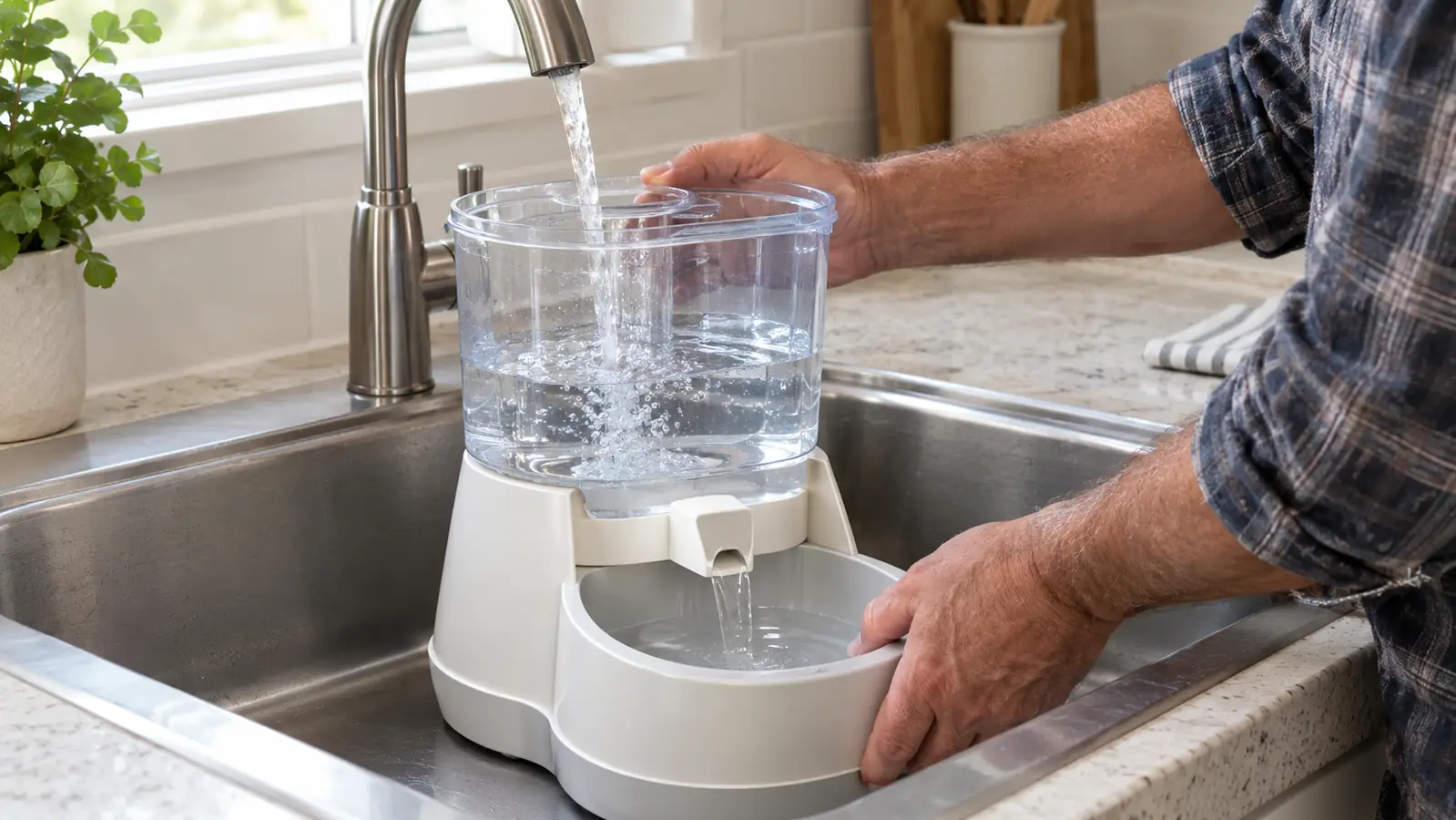
Every morning, I emptied whatever was left in the bowl, wiped out the bowl with a paper towel, and topped off the reservoir with fresh water from the tap. I did not wait for the unit to run dry. A gravity waterer works best when the reservoir stays at least half full, because that keeps the water pressure steady and the flow even.
I learned this the hard way during a busy July when I let the Petmate run low and came home to a bowl that was barely a quarter full. The dogs were fine, but they had clearly been waiting. After that, I made it part of my morning routine, right after I filled the food bowls. The Petmate has a clear reservoir, so a quick glance told me exactly when it needed a refill.
A note on water temperature: I used cool tap water, not cold from the fridge. Some guest dogs refused very cold water, especially in winter, and room temperature water seemed to encourage them to drink more. The Petmate reservoir does not insulate, so in summer I kept the unit out of direct sunlight to keep the water from getting warm.
Step 5: Watch the Water Level and Clean Weekly
Even with daily topping off, a gravity waterer needs a full cleaning at least once a week. Saliva, dust, and the occasional piece of kibble find their way into the bowl, and if you do not clean the reservoir, a slimy film can build up on the inside. I took the whole Petmate apart every Sunday, washed it in hot, soapy water, and let it air dry completely before putting it back together.
The Petmate comes apart into pieces that are easy to wash by hand, which is one reason I stuck with it. I also checked the valve area for hair and debris, because a single long dog hair can keep the valve from seating properly. That weekly cleaning took me about five minutes, and it kept the water tasting fresh enough that even picky guest dogs drank normally.
If you notice the water level dropping faster than usual, check for a leak before assuming the dogs are drinking a lot. I had one summer where a guest dog figured out how to push the valve and drain the reservoir onto the floor. The Petmate is well made, but a determined dog can do surprising things. A quick look under the unit each morning caught that problem early.
What Else Helps
A gravity waterer is the backbone, but a few other things made my setup work better. I kept a second bowl of plain water in the boarding room during the first hour after a new dog arrived, because some dogs are suspicious of a new contraption and will only drink from something that looks familiar. I also placed the Petmate on a boot tray, which caught any splashes and kept the tile floor dry.
For multi-day stays, I wrote the fill date on a piece of masking tape on the reservoir. That sounds silly, but when you are juggling four dogs and a life, it is easy to forget whether you changed the water yesterday. The tape gave me a quick visual check. And if a guest dog had a medical condition that required measuring water intake, I skipped the gravity waterer entirely and used a measured bowl, because I needed to know exactly how much that dog drank.
One more habit saved me a lot of worry: I checked the waterer every time I walked through the mudroom, which was at least a dozen times a day. A quick glance at the reservoir level and the floor around the base told me everything I needed to know. Guest dogs cannot tell you when they are thirsty, so the waterer became my way of keeping an eye on them without hovering.
In eleven years of boarding, I only had to reseat the Petmate valve once, and it took ten seconds.
Why I Still Recommend It
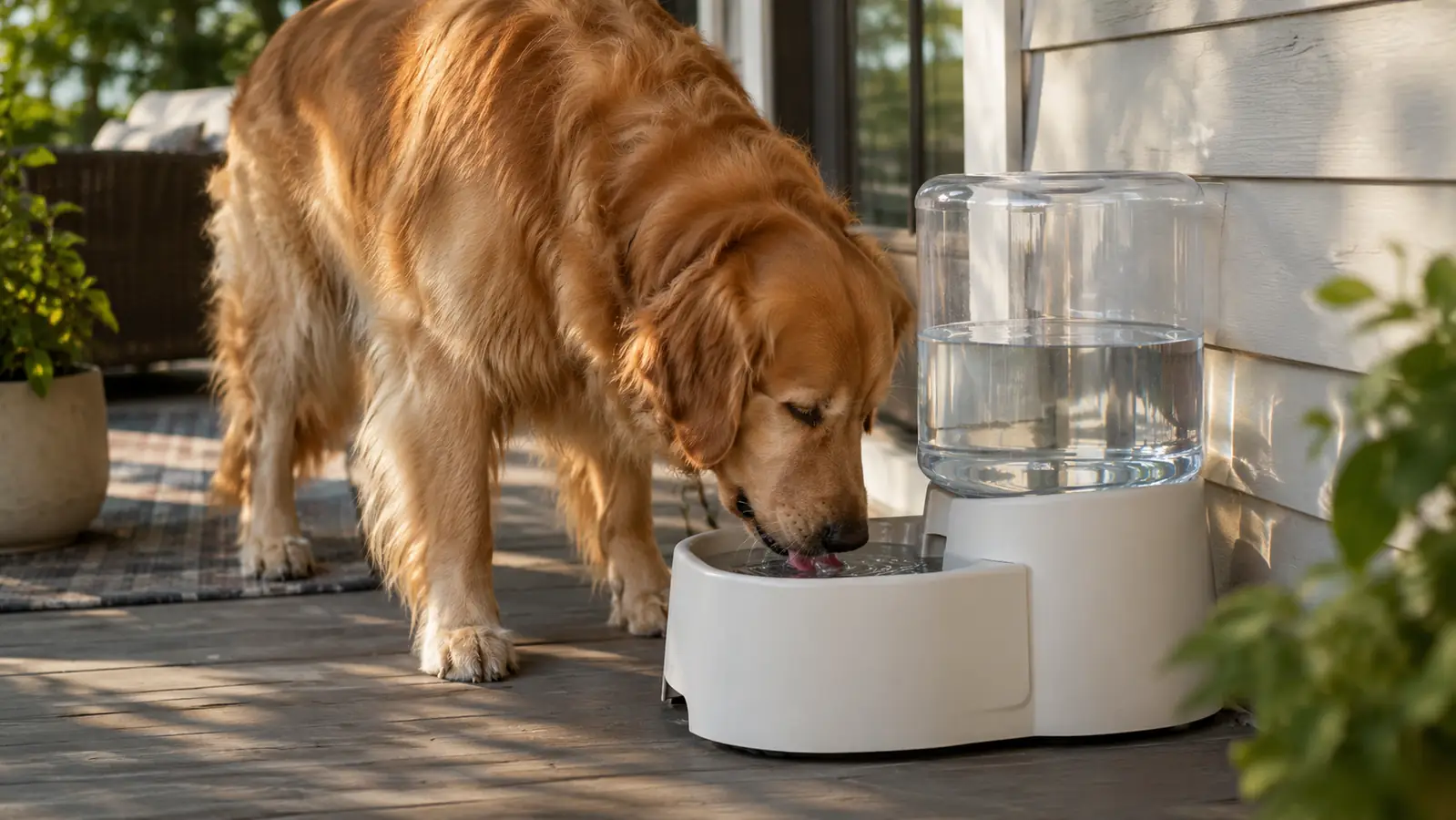
After eleven years and hundreds of guest dogs, the Petmate Pet Cafe is the waterer I would buy again tomorrow. My own dog, Juniper, a seven-year-old Australian Shepherd mix, supervises every guest dog, and she drank from the Petmate without a second thought. It is not the biggest or the most expensive, but it is dependable, easy to clean, and simple enough that a nervous dog does not find it scary. If you are setting up a space for guest dogs, start here.
I know some people will say a simple bowl is enough, and for one dog, it often is. But when you have a houseful of guest dogs, the difference is the margin for error. The Petmate gives you that margin. You can leave the house for an afternoon and come back to a bowl that still has water in it.
Set up your guest room with a waterer you can trust.
The Petmate Pet Cafe is the same model I used for years in my boarding room. It is easy to clean, holds enough for a full day, and gives you one less thing to worry about when you have a houseful of dogs. Check today's price on Amazon and see if it fits your setup.
Amazon Check Today's Price on Amazon →