
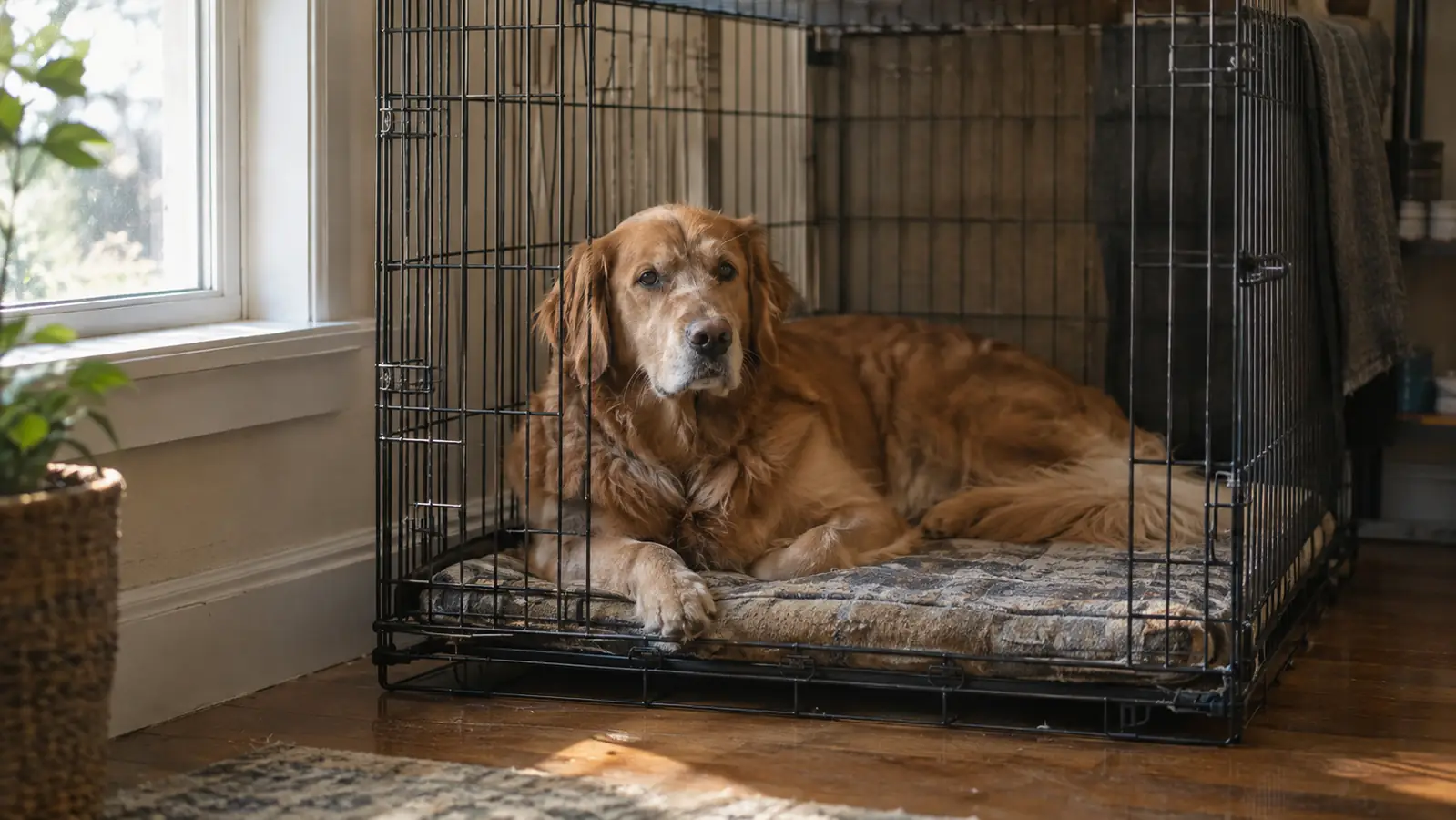
The first night is always the worst. A nervous guest dog arrives, tail tucked, refusing the treat you offer, circling the same three feet of floor like a wind-up toy. If you have ever stood in a mudroom at 9 p.m. with a pacing dog and no idea how to help, you know the feeling. The easy instinct is to let them roam the whole house and settle in on their own. That instinct is usually wrong.
I ran a small licensed in-home boarding business out of my ranch house outside Loveland, Colorado, for eleven years, four to six guest dogs at a time, most of them anxious on day one. What I learned is that a nervous dog settles faster in a crate than in an open room, almost every time. The crate I bought again and again is the MidWest Homes for Pets 42-Inch Double Door iCrate. It is not the fanciest crate on the market. It is the one that worked for the widest range of dogs, including the ones who arrived shaking.
The Crate This Whole Routine Is Built Around
The MidWest Homes for Pets 42-Inch Double Door iCrate is the crate I used on every nervous guest dog for eleven years. It sets up in seconds, folds flat when you need the floor space, and the two doors make every step of this routine easier.
Amazon Check Today's Price on Amazon →Why a Crate, and Why This One
A nervous dog is not helped by more space. An open room gives them too many choices: which corner, which smell, which exit, which person to watch. That is exhausting for a dog who is already overwhelmed. A crate removes the choosing. It gives them one quiet place where nothing is expected of them, and most dogs, given the choice, will pick it within a day or two.
The double door is the detail that sold me on the MidWest Homes for Pets design. When a dog is scared, the last thing you want to do is loom over their head to reach into the crate. With a door on the side, you can drop a treat in from an angle they can see coming, or clean the pan without ever crowding them. I kept the 42-inch size because it fits a large dog up to about 90 pounds with room to stand, turn around, and lie down stretched out. That matters. A crate that is too small feels like a trap, and a crate that is too big stops feeling like a den.
I will be honest about one thing: a wire crate is not a magic wand. It will not fix a dog who is sick, in pain, or genuinely terrified of being confined. What it does is give a nervous dog a predictable place to land while their body figures out that this house is safe. The routine matters more than the crate. But the right crate makes the routine possible.
Step 1: Set Up the Crate Before the Dog Arrives
Put the crate together in the room where the dog will spend most of their time. For me that was the mudroom I converted into the boarding room. Set it on a mat or a rug so it does not slide, put a folded blanket inside, and leave the door open. Do this a day ahead if you can, so the smell of a new crate has time to fade. Wire crates ship folded flat and can carry a faint factory smell that some dogs read as wrong.
Place the crate where the dog can see the room but is not in the middle of traffic. I put mine against a wall, facing the door, so a guest dog could watch me come and go without being startled when someone walked past. Do not shove it into a dark corner. A nervous dog needs to see what is coming. The crate is not a timeout spot. It is a bedroom, and you are setting it up the way you would set up a guest room.
One more setup detail: leave the top of the crate clear and keep the area around it uncluttered. A nervous dog is already scanning for threats, and a pile of bags leaning against the crate gives them something to worry about. I kept the floor around mine swept and the wall beside it bare. It sounds fussy, but a calm room reads as a calm house to a dog who is deciding whether to relax.
Step 2: Feed the First Meal Near the Open Door
Do not push the dog into the crate on day one. That is the fastest way to teach them that the crate is where scary things happen. Instead, put their regular food bowl just outside the open door and let them eat there. The next meal, set the bowl just inside the door, so they have to put their head in to reach it. The meal after that, move it a few inches deeper. Their own hunger does the training for you, and they never get pushed.
Offer the first meal after a walk, when the dog is tired and more likely to eat. If a guest dog refused food for more than a day, I called the owner, and if it went longer, I called the vet. I am not a vet, and I do not play one. A dog who is too stressed to eat sometimes needs a professional's eyes on them, not a longer training session.
Step 3: Make the Crate the Quietest Spot in the Room
Once the dog is eating with their whole body inside the crate, leave the door open and let them nap in there. I made sure the crate was the only truly quiet spot in the room. I would do chores, Juniper would wander through to check on the newcomer, and life went on around them. Juniper is my Australian Shepherd mix, and she supervises every guest dog like it is her job, but she learned to leave the crate alone once a guest claimed it.
The rule for this step is simple: do not close the door the first time they choose the crate on their own. Let them sleep in there with the door open for a day or two. The goal is to make the crate the place where nothing happens. No one touches them, no one reaches over them, no one asks anything of them. A nervous dog will start choosing that spot on their own, usually within the first two days.
If the dog will not settle in the crate at all on the first day, do not force it. I had a nervous beagle one Christmas who would not go near the crate for the first two days no matter what I put inside it. I left the door open, ignored the crate completely, and on the third morning I found her asleep in it. Some dogs need to decide for themselves that the crate is safe. Give them the time to make that decision.
Step 4: Close the Door for Ten Minutes While You Stay in the Room
The first closed-door sessions should be short and boring. Close the door, sit a few feet away, and read or fold laundry. Do not make eye contact or coo at the dog. The lesson is that the door closes, nothing bad happens, and the door opens again. Ten minutes is plenty for the first session. If the dog is quiet, open the door, let them come out, and act like it was no big deal.
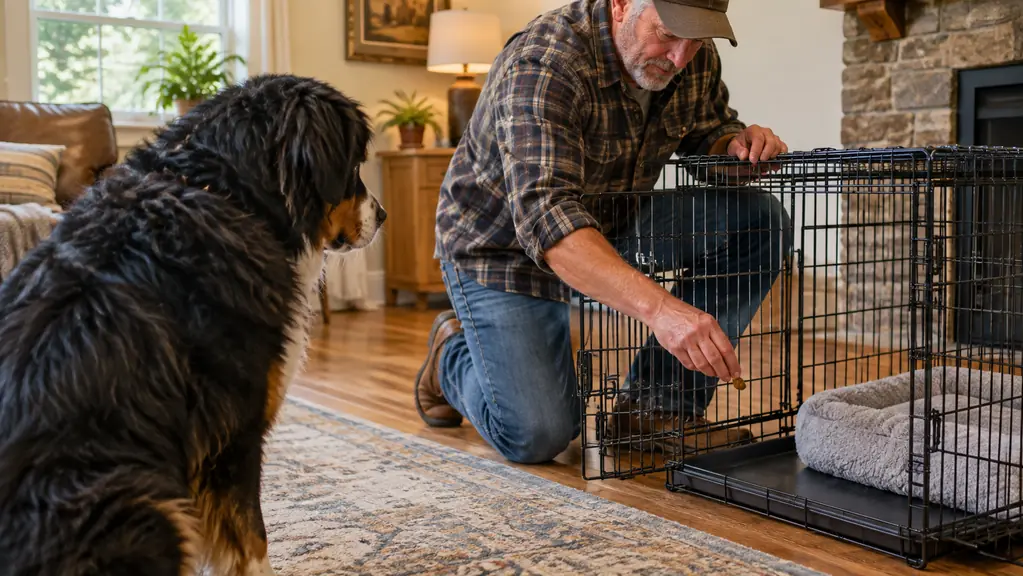
Over the next few days, stretch the sessions and start stepping out of the room. First for a minute, then for five, then for a short errand. The double door earns its keep here. You can reach through the side door to drop in a treat without looming over the dog's head, which keeps the whole experience calm. If the dog cries, wait for a lull before you open the door. Opening it mid-panic teaches them that panic opens doors. Keep the sessions short enough that they are not panicking for long.
Two rules I never broke. I never used the crate as punishment, and I never dragged a dog out of it. The crate has to stay neutral. If a dog ever truly panicked in the crate, drooling, clawing at the door, trying to hurt themselves getting out, I stopped using it and called the owner. Some dogs have real confinement anxiety, and that is a question for a vet or a certified trainer, not for more repetition.
Step 5: Build a Routine Around the Crate, Not Just the Crate
Nervous dogs settle fastest on a schedule. Mine went something like this: morning walk, breakfast in the crate, quiet time while I cleaned, a midday check, afternoon play in the fenced side yard, dinner, and an evening settle in the crate with the door open. The crate became the anchor of the day. By the third day, most of my nervous guests were walking into it on their own the second they saw me pick up the treat jar.
I also asked owners to send something that smelled like home, an old t-shirt or a worn blanket, and I put it in the crate. It sounds like a small thing, but it did more for nervous dogs than any training trick I know. The point of all five steps is not to make a dog love the crate. It is to make the crate feel as normal as a bed, so that when the door closes, the dog's brain says 'quiet time,' not 'danger.'
The last piece of the routine is what happens when the crate door opens. I never made a production of letting a dog out. I opened the door, said nothing, and went back to whatever I was doing. The less drama around the crate, the faster a nervous dog treats it like furniture. By the end of a week, most guests were using it the way Juniper uses the couch, as just another place to be.
Common Mistakes I Saw
The biggest mistake owners made was closing the door too early, on day one, while the dog was still frantic. The second was using the crate as a punishment, which turns the crate into the bad place in about thirty seconds. The third was leaving a nervous dog in the crate for most of the day and expecting them to love it. A crate is for quiet time and sleeping, not for warehousing a dog while you are gone for ten hours.
I also saw the opposite mistake: owners who felt so guilty about the crate that they never closed the door at all, and then wondered why the dog never settled. A nervous dog does not need to be free. They need to feel safe, and sometimes the safest place in the house is the one small, quiet box with their blanket in it. Used the way I have described, the crate is the kindest thing you can do for a guest dog in the first few days.
What Else Helps
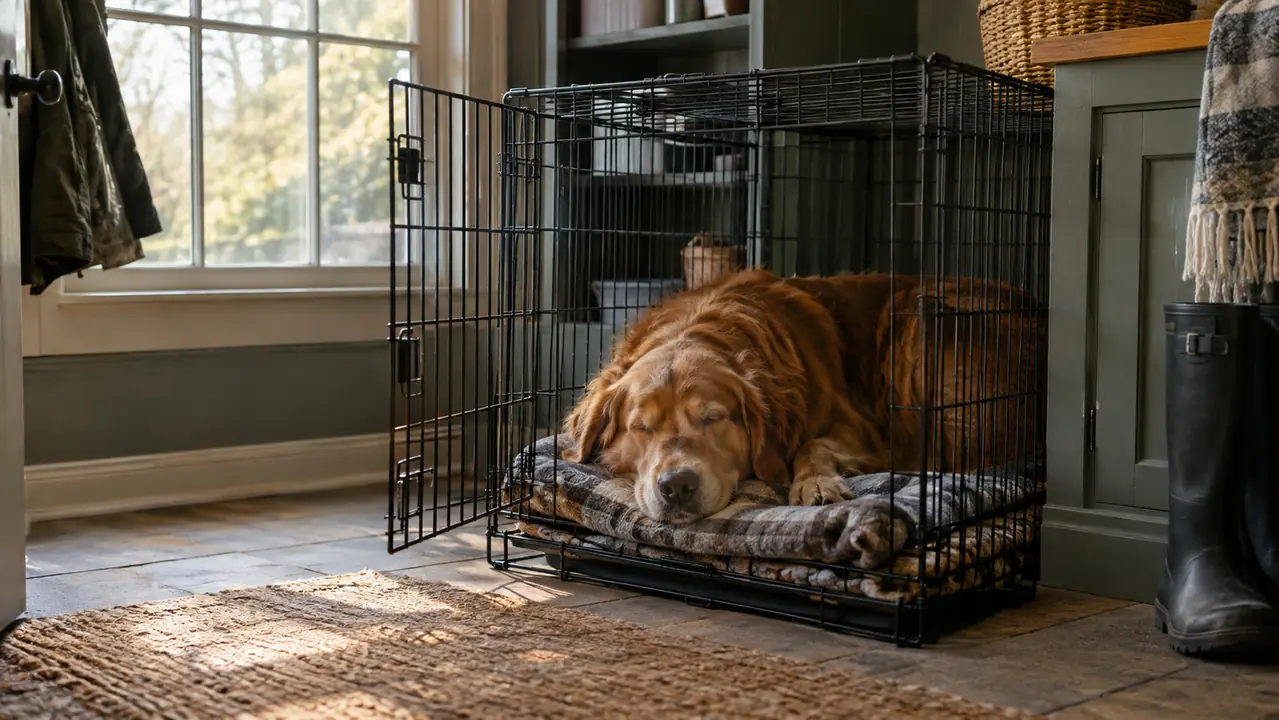
A few things made the routine work better. I always exercised a nervous dog before the first meal of the day, because a tired dog eats sooner. I kept a radio on at low volume in the boarding room to cover outside noises. I gave crate time in chunks of a few hours, never all day, and I never left a guest dog crated while I left the property for long stretches. If a dog was still refusing the crate after a week of this, I stopped pushing and talked to the owner. The crate is a tool, and like any tool, it is not the right one for every dog.
One more thing I would tell any owner: do not sneak the dog into the crate and then leave for eight hours. The first few closed-door sessions should happen while you are home, so the dog learns that the door opens again. If you need to leave the house, keep the first absence short, an hour or two, and build up from there. That is how the crate earns trust instead of fear.
By day three, most of my nervous guests were walking into the crate on their own the second they saw the treat jar. That is the whole goal.
Give Your Nervous Guest the Same Head Start
The MidWest Homes for Pets 42-Inch Double Door iCrate is the crate I reached for eleven years straight. It sets up in seconds, folds flat when you need the space, and the two doors make every step of this routine easier on a scared dog.
Amazon Check Today's Price on Amazon →