
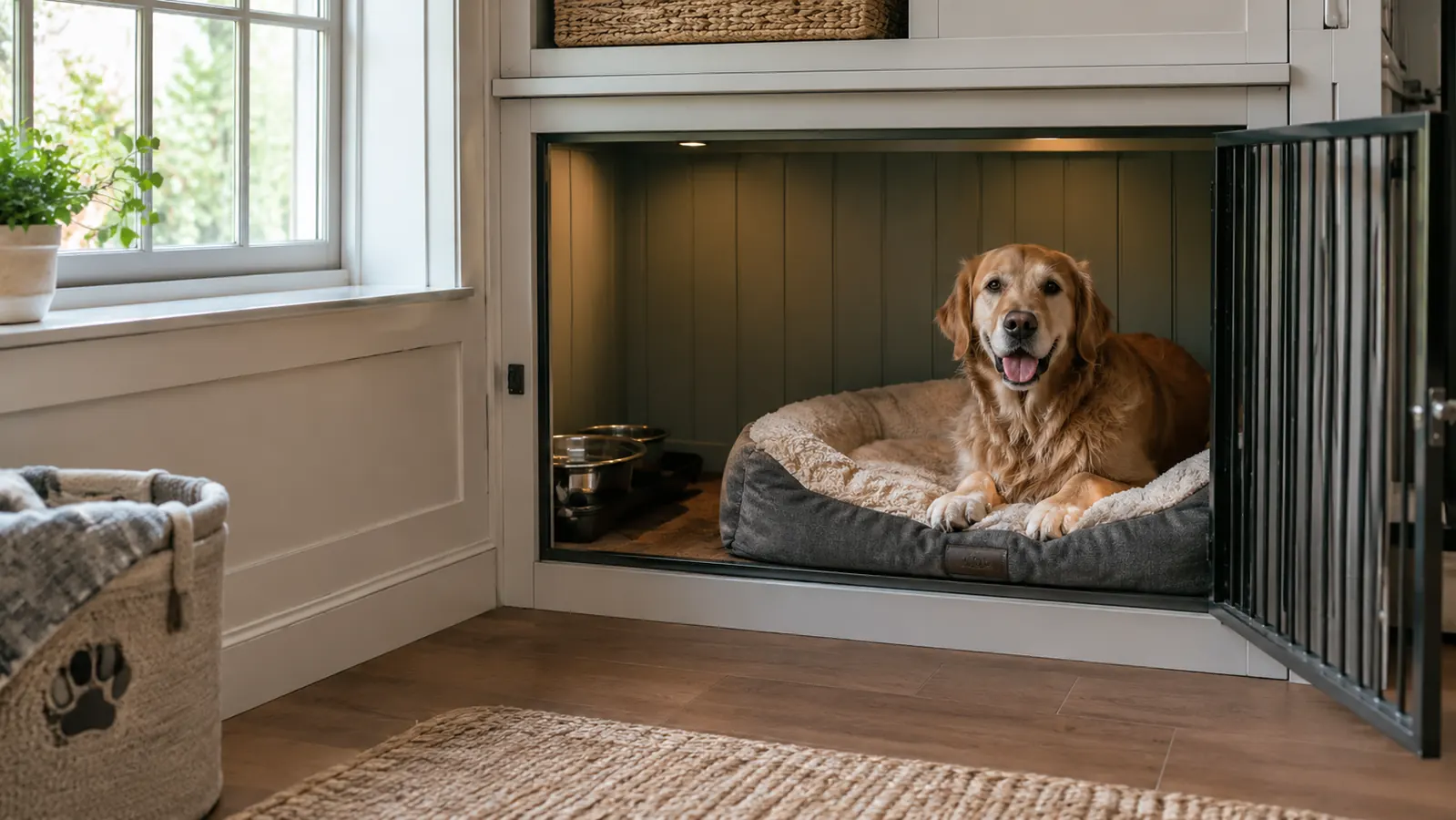
I ran a licensed in-home dog boarding business out of my converted mudroom for eleven years. Four to six guest dogs a week, and that room saw more urine than any surface should. I tried bleach, vinegar, baking soda, a rented carpet machine, and a handful of sprays that mostly smelled like perfume over a problem. Nothing fixed the odor for more than a day. The product that actually worked was the Rocco & Roxie Supply Co. Enzyme Stain & Odor Eliminator.
The trouble with urine odor is that it is not really on the surface. It soaks into grout, wood, underlayment, and the bottom edge of baseboards. Ordinary cleaners remove the wet spot but leave uric acid crystals behind. When the room gets humid or warm, the crystals wake up and you get that ammonia smell again. An enzyme cleaner works differently. It breaks down the uric acid into gas that evaporates. That is why the process takes longer, and why it actually works.
The Cleaner That Finally Got the Smell Out of My Boarding Room
I kept a gallon of Rocco & Roxie Supply Co. Enzyme Stain & Odor Eliminator in the mudroom cabinet for every guest dog that came through. It is the only cleaner I trusted on a floor where dogs slept.
Amazon Check Today's Price on Amazon →Why Enzyme Cleaners Are Different
Most people grab bleach because bleach smells clean. That is exactly the problem. Bleach does not break down uric acid, and the nitrogen in urine reacts with bleach to form a gas that is not something you want your dogs breathing. Vinegar neutralizes a little ammonia but does not dissolve the crystals. Baking soda absorbs surface moisture but leaves the stain deep in the subfloor. None of them remove what is actually causing the smell.
Enzyme cleaners use bacteria and enzymes that digest organic waste. The Rocco & Roxie Supply Co. formula contains a blend of enzymes that target the proteins and fats in urine. You are not covering up the odor. You are feeding the stain to organisms that turn it into harmless gas and water. That is why the room smells clean for months instead of for an afternoon.
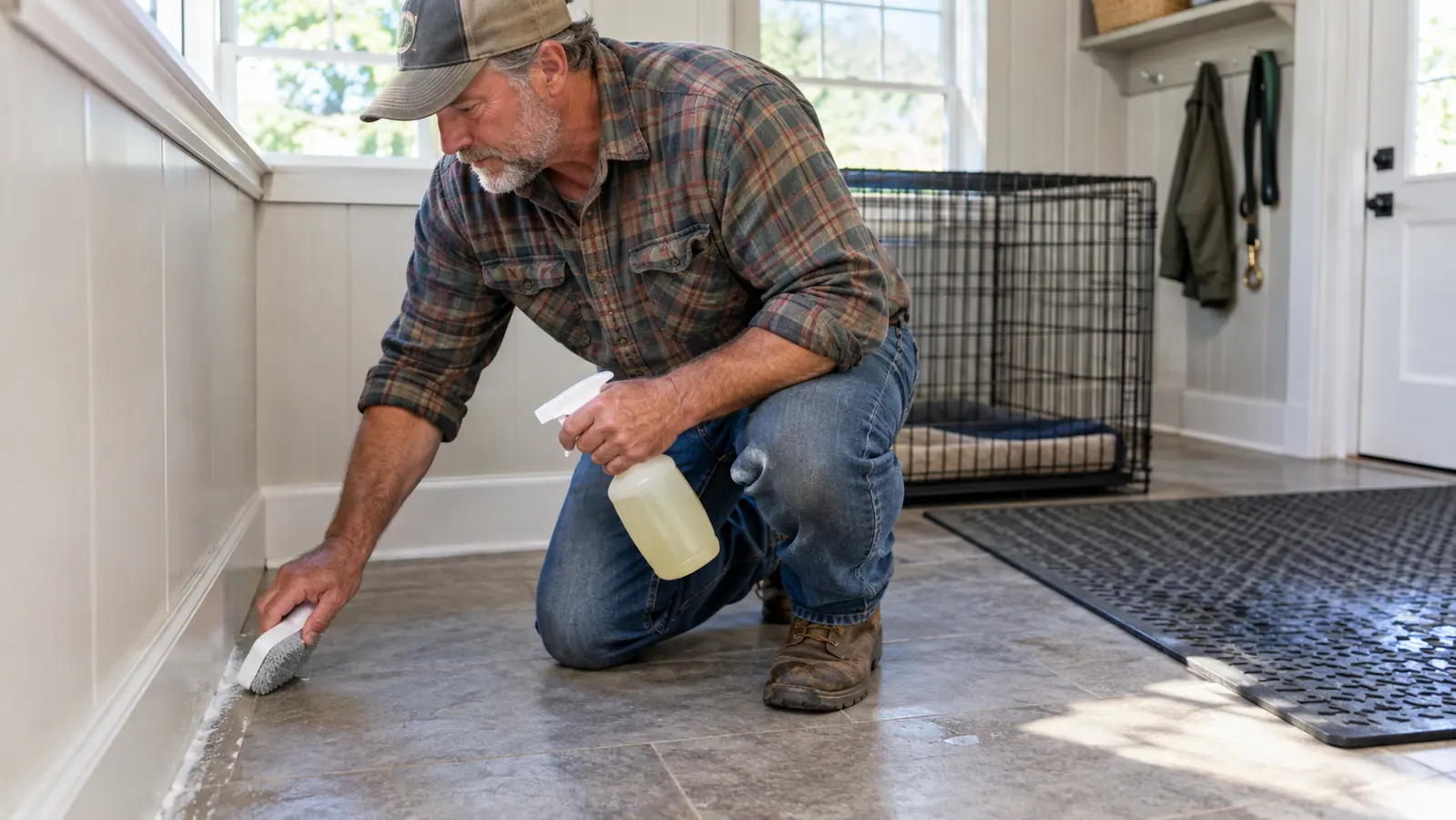
What You Need Before You Start
You do not need a lot of equipment. A shop vacuum, a bucket, a clean mop, paper towels, a spray bottle, a box fan, and a roll of painter's tape are enough. I also kept an old flashlight with a UV setting in the garage. It made hidden spots glow and saved me from treating the same corner twice. If you do not have a UV light, a bright flashlight and a nose at floor level will find most of the trouble.
Plan to do this on a day when the room can stay empty for several hours. Enzyme cleaners need time to work, and the floor needs time to dry. I usually picked a Monday, when no new guests were arriving, and gave the room the whole day. If you are treating a room you use every day, do it in the evening and let it sit overnight.
Step 1: Clear the Room and Find Every Spot
Move everything out. Dog beds, crates, food bowls, toys, rugs, and any furniture. I used to stack crates in the hallway and lean the beds against the garage wall. You need bare floors and bare walls because urine finds every edge. If a crate sat in the same corner for two years, the floor under it has a stain you have never seen.
Once the room is empty, get down at floor level with a good flashlight. Look for pale yellow rings, dark edges along baseboards, and any spot where the floor color looks different. Mark each one with a piece of painter's tape. Do not trust your nose alone. It catches the worst spots, but it misses the ones that have dried to nothing and will reactivate the first warm day.
Step 2: Remove the Heavy Soil Before the Enzymes
Enzymes digest urine, but they cannot digest a pile of hair or a dried smear of whatever your guest dog dragged in. Sweep and vacuum the whole room. If there is any solid waste or fresh urine still present, pick it up with paper towels and throw it away. Then wipe down baseboards and the lower few inches of walls with a damp cloth. You want the surface physically clean so the enzyme can reach the stain.
Do not use a strong detergent or a degreaser on the spots before you apply the enzyme. Some cleaners leave a residue that blocks the enzymes. If an area is dirty, a quick rinse with plain water and a cloth is better than a heavy cleaner. The goal is not to sanitize the spot yet. The goal is to get the enzyme down to the uric acid.
Step 3: Saturate the Stain and Let It Dwell
Pour the enzyme cleaner directly onto the spot. You want it wet enough that it soaks a little past the visible stain, about an inch beyond the edge. For a baseboard or a grout line, use a spray bottle and saturate until it runs slightly. Do not wipe it up. The enzymes need time to work, and they need the surface to stay damp.
How long should you leave it? The instructions say to let it air dry. In practice, I sprayed the floor before I left the room in the morning and let it sit all day. For an old stain that had been there for months, I reapplied every day for a week. The dwell time is what separates an enzyme cleaner from a spray that just smells good for an hour.
Step 4: Blot, Rinse, and Repeat for Old Stains
After the dwell time, blot up the excess with a clean towel. Do not rub. Rubbing pushes the urine deeper into the fibers. For hard floors, a mop with plain water removes the leftover enzyme solution. Then let the room air out with a fan and an open window. The smell should be gone by the time the floor is dry.
If the odor comes back when the room warms up, the stain went deeper than the first treatment could reach. That is normal. Old urine can soak through a floor into the subfloor, and it takes more than one round. Reapply the enzyme cleaner the same way, leave it longer, and give it a second or third day. I had one corner under a crate that took four treatments before it stopped reactivating on humid summer days.
Step 5: Make Enzyme Cleaning Part of the Routine
The best time to deal with urine is the minute it happens. Keep a bottle of enzyme cleaner in the room, not in a cabinet down the hall. When a dog has an accident, blot up what you can, spray the spot, and let it dry. If you do that every time, you never get to the point where you are trying to remove a year of old stains from a subfloor.
For a boarding room that gets regular use, I did a weekly enzyme mop of the whole floor. I put a gallon of Rocco & Roxie Supply Co. cleaner in a bucket of warm water and went over the floor with a mop, then let it air dry with the door open. It is not a substitute for cleaning up accidents right away, but it keeps the room from developing that base note of old dog that guests smell the moment they walk in.
One note about crates. The plastic trays absorb urine and hold the smell even after the floor is clean. I washed every tray with the enzyme cleaner, let it sit for an hour, and rinsed it in the yard with the hose. It took an afternoon once a month, and it stopped the crates from making the whole room smell like a kennel.
How I Kept the Mudroom From Smelling Like a Kennel
The biggest mistake I made in my first year of boarding was waiting until I could smell the room from the hallway. By then, the odor had already soaked into the floor and the walls. Once I started treating every accident immediately and doing a weekly enzyme mop, the room stopped developing that smell in the first place. Prevention is easier than restoration.
I also learned to pay attention to the dogs. A nervous dog who paces and sniffs the same corner is telling you something. A dog who has an accident once in the same spot will often go back to that spot, because his own scent tells him it is allowed. If you clean the spot well with an enzyme cleaner, you remove that signal. If you only wipe it with soap, the dog keeps returning to the same place.
Airflow matters more than people think. I kept a small fan running in the mudroom whenever it was empty. It dried accidents faster and kept the room from feeling stuffy. In winter, when the windows stayed shut, the fan and a dehumidifier made the difference between a fresh room and a room that smelled like damp dog no matter what I cleaned it with.
One winter I had a guest dog who was terrified of the crate and refused to settle. He paced the same corner for an hour and finally peed on the wall. I cleaned it the next morning with enzyme cleaner, but the corner still smelled faintly for weeks because the urine had soaked into the drywall. I ended up cutting out a small square of drywall, treating the stud behind it, and patching the wall. It taught me to check walls and corners, not just floors.
What Else Helps
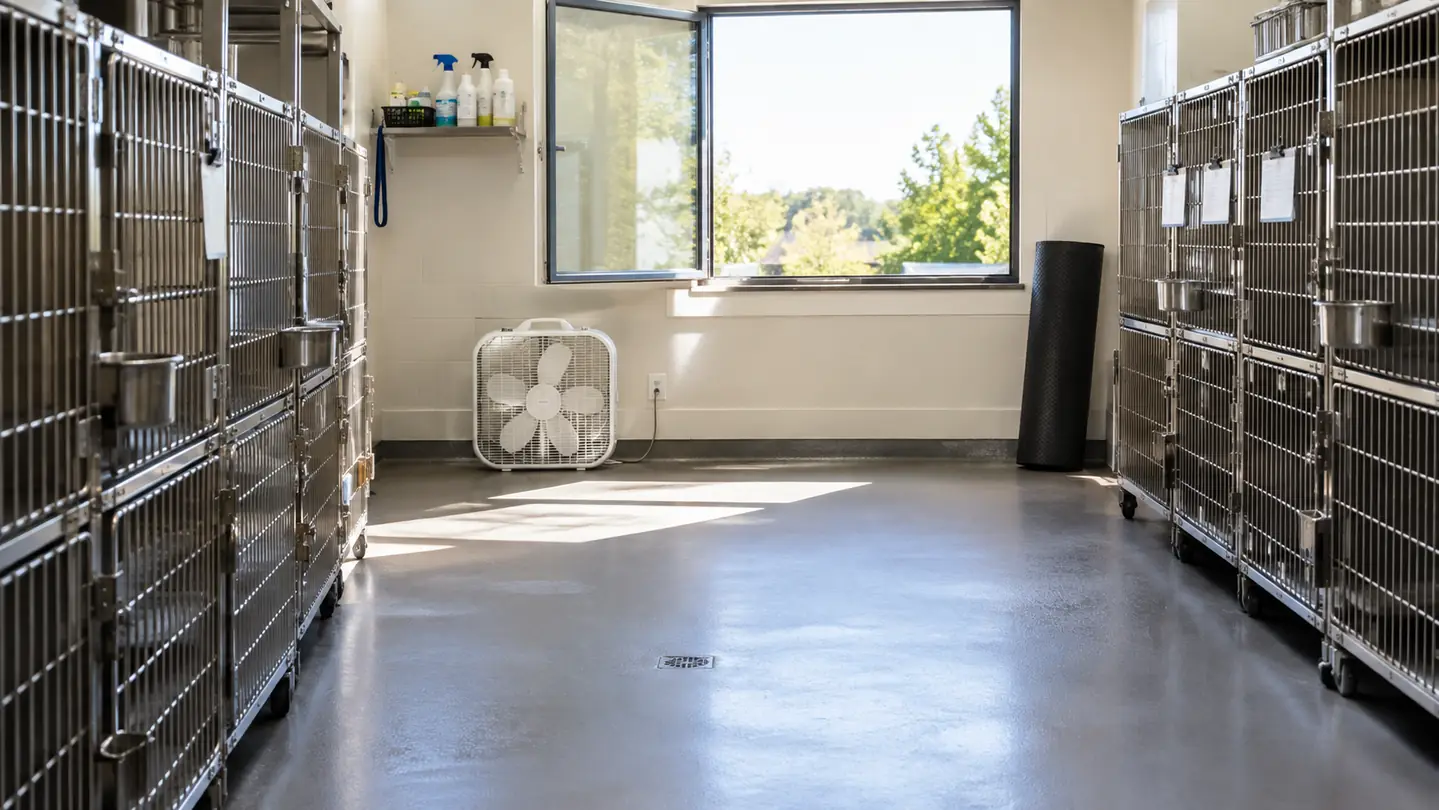
An enzyme cleaner does the heavy lifting, but a few other things made my kennel room easier to keep clean. A waterproof rug pad under any bed keeps accidents from soaking into the floor. A box fan aimed at the floor speeds up drying, and a dehumidifier helps in summer. I also kept a second set of crate trays so a wet one could dry for a full day before it went back into use.
One more thing: wash the walls. Dog urine splashes lower on the walls than most people think. Every few months I wiped the baseboards and the lower two feet of wall with the enzyme cleaner. It took ten minutes and it stopped the room from smelling like a kennel even when the floor looked clean.
I used a cheap plastic spray bottle for the weekly mop, and I labeled it so nobody used it for anything else. The same bottle stayed in the mudroom with the cleaner. A dedicated bottle means you never grab the one that had weed killer in it, and you never have to wash out the smell of a different product before you use it.
I could scrub a stain until the carpet changed color and still smell ammonia by evening. The first time I let an enzyme cleaner sit overnight, the room smelled like nothing. That was the whole fight.
The Bottom Line
Getting urine odor out of a kennel room is not about finding a stronger-smelling cleaner. It is about removing the uric acid that keeps producing the smell. An enzyme cleaner does that, but only if you use it correctly: clean the surface first, saturate the stain, let it dwell, and repeat when the stain is old. That is the whole process, and it works.
I have cleaned up after nervous puppies, senior dogs with weak bladders, and a few guest dogs who were convinced that the corner of the mudroom was their personal bathroom. The Rocco & Roxie Supply Co. Enzyme Stain & Odor Eliminator handled all of it. If you run dogs through the same room day after day, keep a gallon on hand and use it before the smell has a chance to set in.
Start With a Gallon and Keep It Where the Dogs Are
For eleven years I kept Rocco & Roxie Supply Co. Enzyme Stain & Odor Eliminator in the mudroom for every boarding guest. It is the cleaner I recommend to anyone who runs dogs through the same room day after day.
Amazon Check Today's Price on Amazon →