
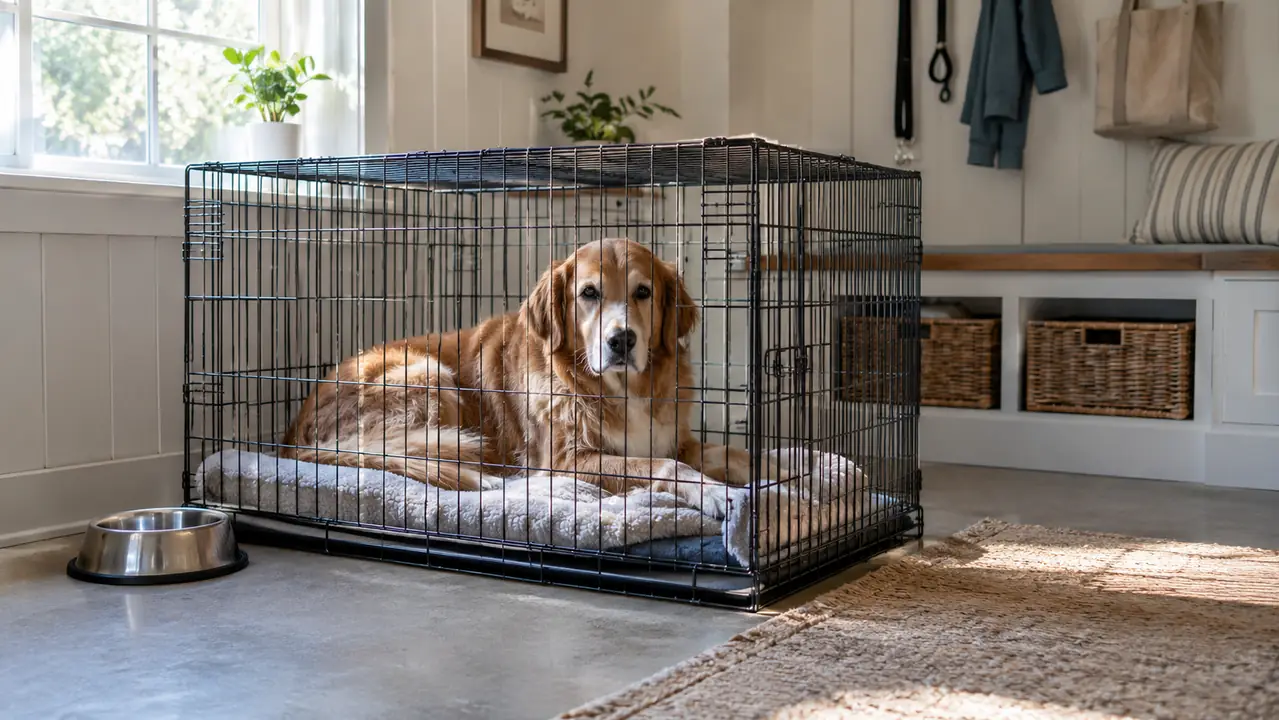
I ran a small licensed in-home dog boarding business out of my mudroom for eleven years. Four to six guest dogs at a time, plus my own Australian Shepherd mix, Juniper, who supervised every single one of them. I cleaned a lot of crates in that time, and I formed strong opinions about which ones survive a houseful of strange dogs. The MidWest Homes for Pets 42-Inch Double Door iCrate is the one I kept coming back to. But after eleven years of daily use, I also know exactly what nobody tells you before you buy one.
Most reviews read like the crate is perfect. It is not. The pan will eventually crack if a heavy dog stands on it wrong. The wire can bend if a determined dog throws his whole shoulder into it. The latches are simple, which is mostly a good thing, but simple also means a smart dog can sometimes figure them out. None of that makes the iCrate a bad crate. It makes it a wire crate, and wire crates have limits. I think you should know those limits before you spend your money, so here is the honest version.
The Quick Verdict
A dependable, easy-to-clean wire crate that earns its place in a boarding room, as long as you know it is not an escape-proof vault.
Amazon Check Today's Price →The Crate I Kept Reaching For After Eleven Years of Boarding Dogs
If you want the same 42-inch double-door iCrate that held up through hundreds of guest dogs in my boarding room, check today's price on Amazon before you settle for a flimsier option.
Amazon Check Today's Price on Amazon →How I've Used It
I converted my mudroom into the boarding room when I started, and I set up four crates along one wall. For the first few years I used a mix of whatever crates previous owners had left behind. That changed when a nervous beagle we boarded one Christmas figured out the flimsy latch on an old crate at 2 a.m. and spent the night rearranging my kitchen. I replaced every crate in that room within a month, and the MidWest Homes for Pets iCrate is what I chose.
I used the 42-inch size for the big dogs, the ones in the 71 to 90 pound range, because it gives them room to stand up, turn around, and lie down flat, which is the standard I tried to hold for every guest. The double doors meant I could open the side door when the crate was wedged against the wall, and that mattered more than I expected in a room that was only so wide.
Over eleven years those crates got used almost daily. They got hosed down, scrubbed, disinfected, dragged outside, dragged back in, folded flat for storage, and set up again. I estimate each one held somewhere north of four hundred guest dogs, plus Juniper when she decided a crate was the best place to supervise from. That is a lot of use, and it tells you things a two-week trial never will.
I also learned to set the crate up the same way every time. The fold-flat design has a particular sequence, and once you do it a few times it becomes muscle memory. I could set up all four crates in under ten minutes, which mattered on a Friday afternoon when three dogs were arriving at once and the phone was ringing.
What the iCrate Gets Right
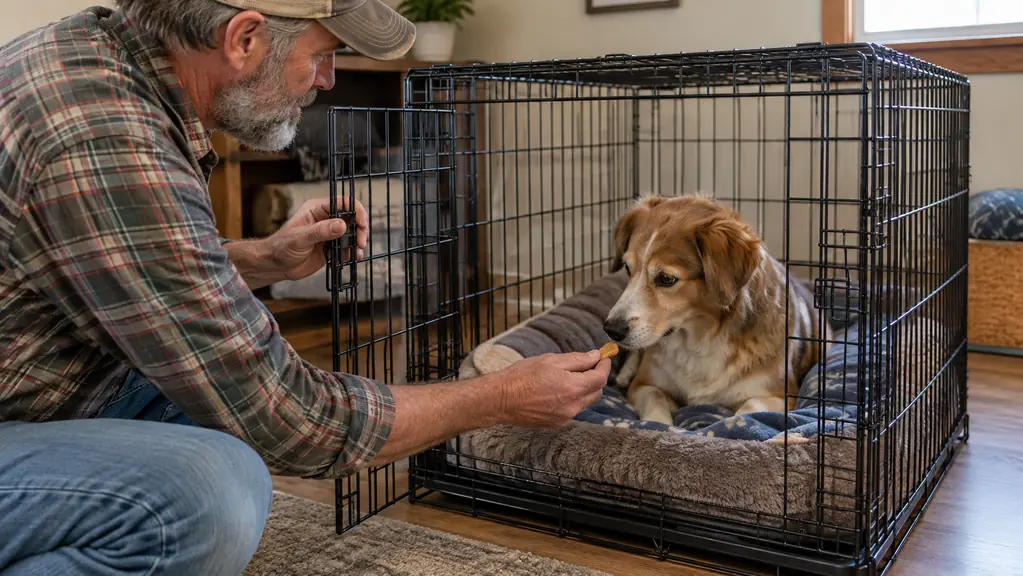
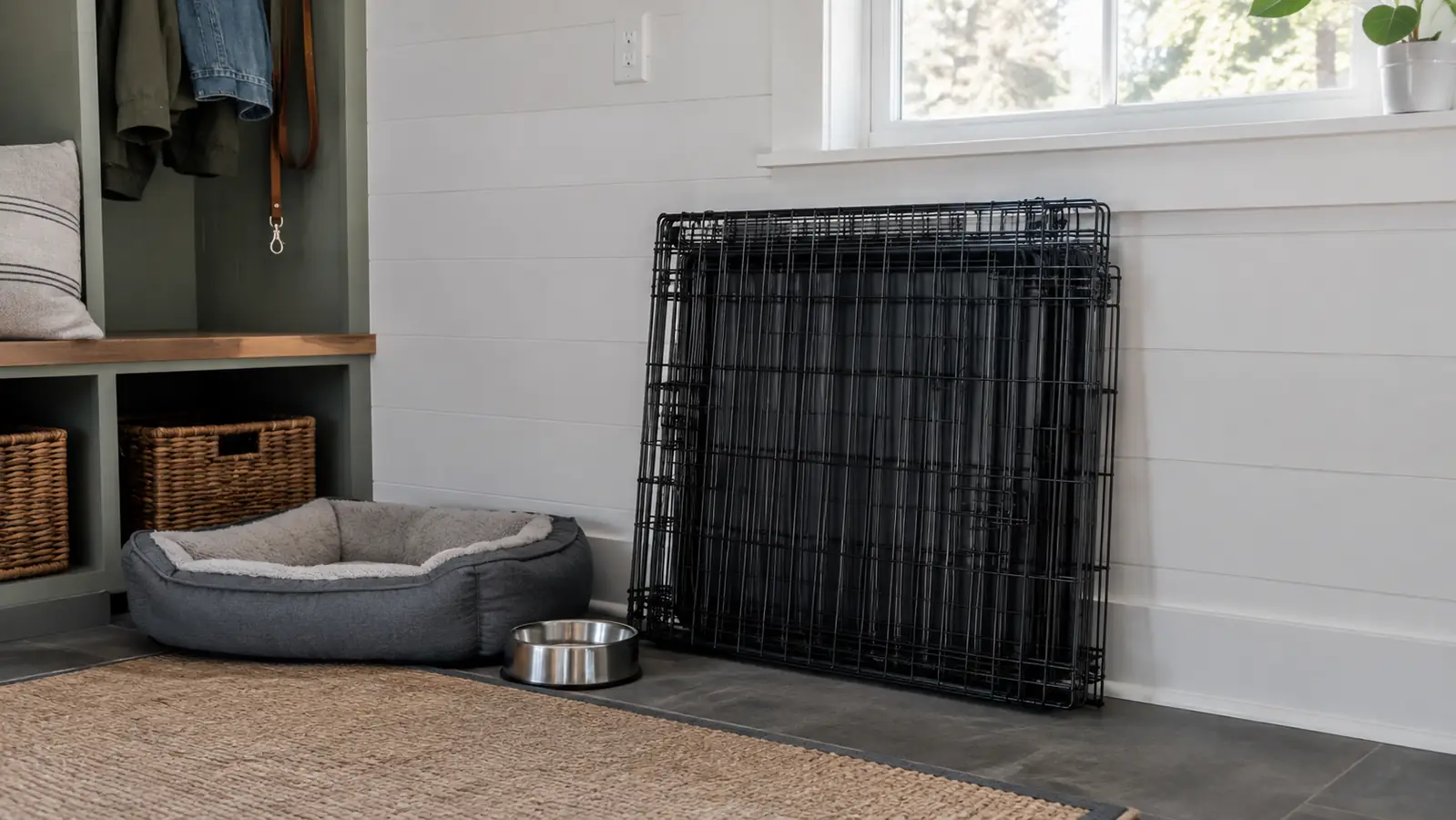
The first thing I noticed is how simple it is. The iCrate is a wire crate with a plastic pan, two doors, and four latches. There is no mechanism to break, no complicated folding system, no part that requires a degree to assemble. It sets up in about a minute and folds flat in about the same. When you run a boarding room, simple is a feature, because you are going to set these up and break them down constantly.
The double doors are the feature I would not give up. The front door is the obvious one, but the side door is what saved my back. I could reach a nervous dog without climbing over the top of the crate, and I could slide a food bowl in from the side without opening the whole front. For a boarding situation, where dogs are often stressed and sometimes reactive, that side access is not a luxury. It is a safety thing.
The pan is also worth talking about, because it is the part most people assume is a weakness. It is a solid plastic pan that slides out from the bottom, and that means you can clean a mess without pulling the dog out of the crate. In a boarding room, that is the difference between a five-minute cleanup and a thirty-minute ordeal. I have cleaned pans that were welded in place on other crates, and I will take a removable pan every time.
Size matters more than people think. The 42-inch is the right fit for a dog in the 71 to 90 pound range, and I was careful to measure guest dogs before assigning them a crate. A crate that is too big gives a dog room to pace and can make housebreaking harder. A crate that is too small is just cruel. MidWest Homes for Pets makes this size in a range that covers most large breeds, and the 42-inch was the one I reached for most often.
What Nobody Tells You Before You Buy One
Here is the honest part. The pan is plastic, and plastic eventually cracks. I went through three pans on my most-used 42-inch crate over eleven years. Most of the cracks started in the corners, where a heavy dog's weight lands when he lies down hard. MidWest Homes for Pets sells replacement pans, which is good, but you should budget for one eventually if you have a dog over seventy pounds.
The wire is not indestructible either. I had one guest, a young lab mix who was not crate trained and did not want to be in there, throw his shoulder into the front door hard enough to bend a wire. The crate still held. He did not get out. But the door never sat quite as flush again, and I had to be careful with the latch after that. A determined, panicked dog can distort a wire crate in a way that a calmer dog never will.
The latches are simple, and simple cuts both ways. I never had a dog open one, but I did have a clever border collie mix figure out that if he pushed the door just right, the latch would rattle. He never got out, but he made the point that these are not escape-proof. If you have a dog who is a known escape artist, you already know you need something heavier than any wire crate.
The other thing nobody tells you is that a wire crate is not a cozy den. It is open on all sides, so dogs can see everything, which is great for anxious dogs who want to watch the room, but it also means drafts. On cold Colorado nights I always put a pad or blanket over the top of the crate to keep the warmth in. The crate itself does nothing to hold heat, and the plastic pan is cold under a dog who is used to a bed.
How It Held Up Over Eleven Years
I am not gentle on equipment. The crates in my boarding room got hosed down with a sprayer, scrubbed with a brush, and dried outside in the sun. They got dragged across a concrete floor in my garage when I rearranged the room. They got folded and unfolded so many times I stopped counting. The MidWest Homes for Pets iCrate took all of it.
The frame never bent out of shape. The welds never broke. The feet, which are just the ends of the wire, never wore through the pan. The plastic latches, which I expected to fail first, are still the original ones on most of my crates. The only parts I ever replaced were the pans and one set of rubber feet that I added myself to keep the crates from scratching the floor.
I also learned that the folding mechanism, which looks flimsy when you first set it up, is actually the strongest part of the design. The crate folds flat by pulling two sides together, and the whole thing locks into place when it is open. I have had cheap crates that collapsed when a dog leaned against the door. I never once had a MidWest Homes for Pets iCrate fold up on a dog, and that is the most important thing I can say about any crate.
What I'd Change If I Could
If I could change one thing, it would be the pan. I understand why it is plastic, because it is light and easy to clean, but I would happily pay more for a pan that did not eventually crack in the corners. I have heard people suggest putting a piece of linoleum or a plastic tray under the pan to spread the weight, and I think that is a reasonable workaround for a very heavy dog.
I would also make the side door a little wider. The side door is the reason I chose this crate, but on the 42-inch size it is just big enough for a food bowl and a hand. For a big dog who needs to be reached from the side, a wider opening would make it easier to help them out without moving the whole crate.
And I would add a better way to keep the pan attached. The pan slides in and out easily, which is great for cleaning, but it also means a dog who digs at the floor can push the pan out of place. I solved that with a bungee cord across the bottom on one crate, and it worked, but it would be better if the design handled it.
The Dogs I Would and Wouldn't Trust in This Crate
Most dogs did great in the iCrate. Puppies, seniors, anxious dogs, dogs who had never been in a crate before. The open wire sides meant they could see me and the other dogs, which settled a lot of them faster than a solid plastic crate ever did. I had a hound mix who cried for the first fifteen minutes of every stay, and the iCrate was the only crate she would settle in, because she could watch the door and know I was coming back.
But I would not trust this crate for every dog. If a dog is a serious chewer, the plastic pan is a target. I had a young shepherd who chewed the corner of a pan down to nothing over a long weekend. If a dog is a determined escape artist, no wire crate is going to hold them, and the iCrate is not the exception. And if a dog is over ninety pounds, I would step up to a larger size or a heavier crate, because the 42-inch is built for the 71 to 90 pound range, and a hundred-pound dog is going to be cramped and unhappy.
The honest way to think about it is this: the iCrate is a management tool for the vast majority of dogs, and it is not a fortress for the small minority that need one. Know which dog you have before you buy.
Alternatives I Considered
I had other crates in that boarding room over the years, so I am not comparing the iCrate to nothing. I used a heavy plastic airline-style crate for a while, and it was great for a dog who needed to feel enclosed, but it was miserable to clean, heavy to move, and the dogs could not see out, which made some of them more anxious, not less.
I also tried a heavy-duty metal crate with a reinforced frame and a thicker pan. It was stronger than the iCrate, no question. But it weighed about twice as much and was harder to fold and store. For a home boarding setup, where I needed four crates that I could move around the room and put away when I had no guests, the extra strength was not worth the extra weight.
Soft-sided crates I would not use for boarding at all. They are fine for travel with a calm dog, but a stressed guest dog can push through the fabric or tip the whole thing over. I kept one for Juniper for car rides and never once put a guest dog in it. That is the right division of labor.
The same 42-inch MidWest Homes for Pets iCrate sat in my boarding room for eleven years, through well over four hundred guest dogs, and it never once let a dog out that was not supposed to be out.
Who This Is For
Buy the MidWest Homes for Pets 42-Inch iCrate if you have a large dog in the 71 to 90 pound range who is already comfortable in a crate, or who just needs a quiet place to settle. It is also the right choice if you run a small boarding operation like mine and you need a crate that is easy to clean, easy to fold, and easy to replace parts on. The removable pan alone is worth the difference between this and a cheaper wire crate.
Who Should Skip It
Skip it if your dog is a dedicated chewer who will eat the plastic pan, or an escape artist who has already gotten out of other crates. Skip it if you need a crate for a dog over ninety pounds, because the 42-inch is not the right size and you will both be miserable. And skip it if you want a crate that is fully enclosed, because the open wire sides are the whole point of this design, and no blanket is going to change that.
What I Liked
- Double doors make it easy to reach a nervous dog from the side
- Removable plastic pan is simple to clean
- Folds flat in about a minute for storage
- Simple latches that rarely fail
- Replacement pans are available when the original eventually cracks
- Open wire sides help anxious dogs see the room and settle faster
Where It Falls Short
- Plastic pan will eventually crack under a heavy dog
- Wire can bend if a panicked dog throws his weight into the door
- Not escape-proof for a determined dog
- Open sides mean drafts, so you will want a cover in cold weather
- Not built for dogs over 90 pounds
Still Deciding? Here Is My Bottom Line
After eleven years and hundreds of guest dogs, the 42-inch MidWest Homes for Pets iCrate is the crate I would buy again for my own boarding room. If it fits your dog's size and temperament, check today's price on Amazon and see for yourself.
Amazon Check Today's Price on Amazon →